Get Full Government Meeting Transcripts, Videos, & Alerts Forever!
Get email alerts on the Data Centers topic
No spam. Unsubscribe anytime.
Waxhaw commissioners adopt 12‑month moratorium on data centers
Summary
After a public hearing with extensive resident testimony, the Waxhaw Board of Commissioners adopted Ordinance 2026014 imposing a 12‑month moratorium on new data centers and related land uses within town limits to allow staff and the board time to research impacts and revise the Land Development Code.
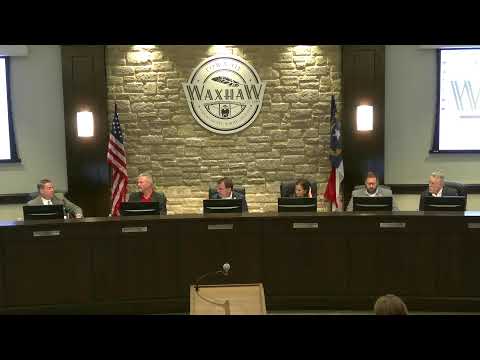
The Waxhaw Board of Commissioners voted Aug. 11 to adopt Ordinance 2026014, imposing a 12‑month moratorium on approvals for new data centers, data processing facilities and similar primary uses within Waxhaw town limits. The board opened a public hearing, heard more than a dozen residents and adopted the moratorium by voice vote.
Planning staff told the board the moratorium is intended to pause approvals while the town researches infrastructure, environmental, noise and utility impacts and drafts LDC amendments. "This will pause approvals of new data centers... for 12 months," staff said during the presentation. Commissioner Perez urged the moratorium as a measured response: "Place the temporary moratorium on this issue... The moratorium is a commitment to do the work before we make a decision with any lasting consequences for this community." The board noted similar moratoria in roughly 30 other jurisdictions and said the pause will allow public feedback and coordination with state partners.
During the public comment period, residents and subject‑matter speakers raised concerns about water consumption, noise, heat rejection, electricity demand and long‑term local job creation. Benjamin Levinson of Lavinia argued the town must "decide what kind of Waxhaw you want," citing health and water‑use studies. A retired utility engineer said Waxhaw lacks the transmission and local water capacity to support large campus‑scale centers. Multiple young residents and parents urged protection of local quality of life and resources.
The mayor and staff stressed the moratorium is proactive rather than a response to an active local application; the ordinance will expire after 12 months, upon adoption of an amended LDC, or upon further board action. The board directed staff to work with legal counsel and state partners and to bring proposed code language and options for community input back during the moratorium period.
Authorities referenced in the discussion included state bills mentioned by commissioners (SB 382, HB24, HB170) that relate to municipal zoning authority; the board said it will monitor state action while pursuing local code updates.
Next steps: staff will research technical impacts, draft Land Development Code amendments and schedule public engagement sessions during the moratorium period.