Get Full Government Meeting Transcripts, Videos, & Alerts Forever!
Get email alerts on the Special Education topic
No spam. Unsubscribe anytime.
Audit finds inconsistent inclusion, staffing shortages and funding pressure in Eagle Pass ISD special education program
Summary
A consultant review presented to the Eagle Pass ISD board found special-education identification rose about 48% since 2019 while overall enrollment declined 7.4%, and recommended a districtwide instructional framework, a staffing model and strengthened central-office monitoring to improve inclusion and fiscal sustainability.
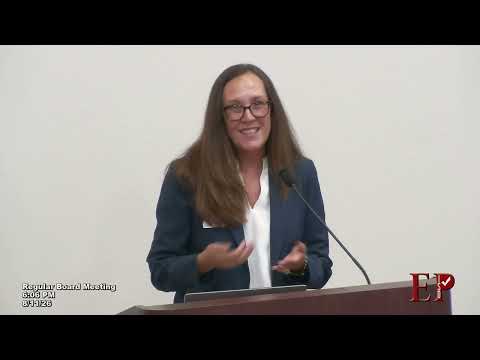
Christa Garcia, a consultant with TK Services by Design, told the Eagle Pass ISD Board on Aug. 11 that a spring 2026 program review found both strengths and important gaps in the district's special-education services. "We identified strengths, gaps, and opportunities for improvement," Garcia said, citing campus observations, stakeholder surveys, IEP reviews and focus groups used for the review.
The audit documented that overall district enrollment has declined 7.4% since 2019 while special-education identification has increased roughly 48% over the same period. Garcia said that change was driven in part by statewide policy shifts (for example moving dyslexia into special education and changes to evaluation guidelines) and by inconsistent implementation of Multi-Tiered Systems of Support (MTSS), which has left special education as a catch-all when tiered supports are not otherwise available. "Inclusive practices and supports are implemented inconsistently, limiting access to general education settings for some students," she said.
Garcia flagged three central problems: an unclear districtwide instructional framework and continuum of services; staffing shortages and high caseloads that limit individualized instruction; and fiscal pressures as federal and other reimbursements have not kept pace with identification increases. She told the board the district often relies on paraprofessionals in lieu of certified teachers in some settings and recommended clarifying instructional roles so certified teachers are responsible for delivering specialized instruction.
Her recommendations included creating a clearly defined instructional framework and continuum of services, expanding inclusive practices through co-teaching or in-class support models, aligning professional learning to district expectations, adopting a formal staffing model matched to student need and service intensity, and strengthening central-office monitoring and coaching so campus leaders can replicate strong practices districtwide. She also urged strategic multi-year fiscal planning and improved SHARS (Medicaid) reimbursement practices.
Trustees asked about benchmarks and implementation timelines; Garcia and district staff said some early steps have begun (particularly around early childhood) but that full change would require phased staffing and resource allocation. "You can't flip a switch," Garcia said, noting that some recommendations will require additional staffing and deliberate allocation of dollars over multiple years.
The presentation concluded with parent- and staff-survey results that were generally positive about services and communication but included recurring parent complaints that they sometimes must escalate concerns to central office to secure consistent services. Garcia recommended data-driven monitoring of IEP implementation and routine staffing and caseload reviews to measure progress.