Get Full Government Meeting Transcripts, Videos, & Alerts Forever!
Get email alerts on the Cpacer topic
No spam. Unsubscribe anytime.
Clean Energy NH explains CPACER program, urges townwide district and use of BFA templates
Summary
Clean Energy New Hampshire told Kensington’s Select Board that CPACER (commercial property assessed clean energy and resiliency) uses private financing attached to properties and that the state Business Finance Authority can administer the program so municipalities face minimal administrative burden.
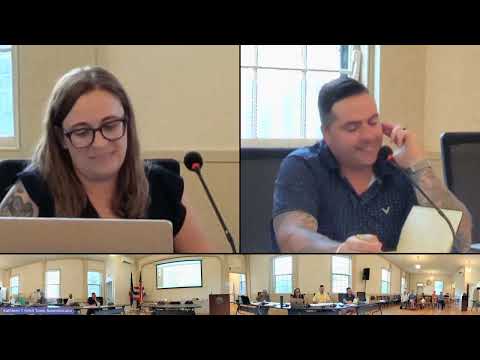
Clean Energy New Hampshire representative Sarah Brock told the Kensington Select Board on Aug. 10 that CPACER — Commercial Property Assessed Clean Energy and Resiliency — is a financing mechanism that attaches repayment to a property instead of a business owner and can cover energy efficiency, water conservation and resiliency measures for commercial buildings and housing of five units or more. She said the New Hampshire Business Finance Authority (BFA) now administers much of the program, which reduces town staff workload.
"It's a unique mechanism that attaches the loan to the property instead of the business owner," Brock said, describing CPACER as private financing provided by banks and credit unions for projects that would otherwise have high upfront costs and long-term benefits. Brock advised that towns typically adopt a district covering the full municipality and use BFA-provided ordinances and participation agreements rather than rewriting the templates.
Board members asked questions about municipal liability, termination and administrative burden. Brock said there is no cost to the town to offer CPACER, and that towns can delegate billing and other routine administration to the BFA or the loan closing attorney. She recommended holding a public hearing to adopt the RSA-authorizing ordinance and then entering into a participation agreement if the board votes to opt in.
The board agreed to place CPACER back on the agenda for further review on Aug. 31 and to use the intervening weeks to examine the draft documents and public materials that Brock provided. Next steps outlined at the meeting: staff review the model ordinance and participation agreement, post public hearing notices if the board moves forward, and consult BFA legal templates as recommended.