Get Full Government Meeting Transcripts, Videos, & Alerts Forever!
Get email alerts on the Public Health topic
No spam. Unsubscribe anytime.
Health agent: state cottage-food rules allow some home kitchens but local zoning and safety requirements must align
Summary
Salem's health agent told councilors that state cottage-food regulations permit certain non-potentially-hazardous food production in homes but residential kitchens have strict separation, refrigeration and inspection requirements that local officials must coordinate to enforce safely.
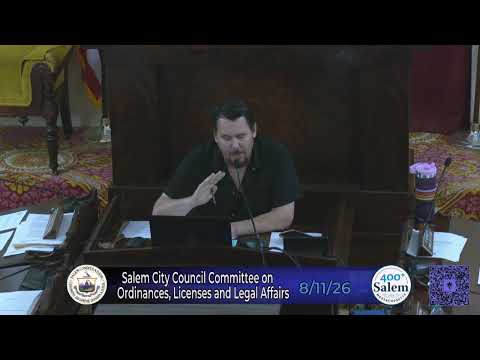
David Greenbaum, Salem's health agent, told councilors that state cottage-food laws allow some food production in homes but that local zoning can still prevent those uses unless adjustments are made. He described practical limitations for residential-food production: separate refrigeration and freezer units, separation of household and business operations, no pets in the kitchen, and the need for local permitting in retail situations. "They have to have separate, you you know, refrigeration and freezer units for their business as opposed to their residence," he said.
Greenbaum and several councilors recommended cross-referencing the state food code (CMR 500) and allowing a delayed effective date or separate treatment for cottage kitchens so the Board of Health could prepare inspection and permit processes. Councilor Zdorjak suggested a 90-day delay or separate cottage-kitchen pathway so the health department would not be playing catch-up if the ordinance took immediate effect.