Get Full Government Meeting Transcripts, Videos, & Alerts Forever!
Get email alerts on the Home Occupation Policy topic
No spam. Unsubscribe anytime.
Salem councilors debate new "home-occupation" zoning language to ease barriers for small in-home businesses
Summary
Councilors and city staff reviewed draft revisions to Salem's home-occupation rules, weighing a clearer, enforceable definition and a potential two-track approach to allow low-impact home businesses by right while retaining oversight for higher-risk uses.
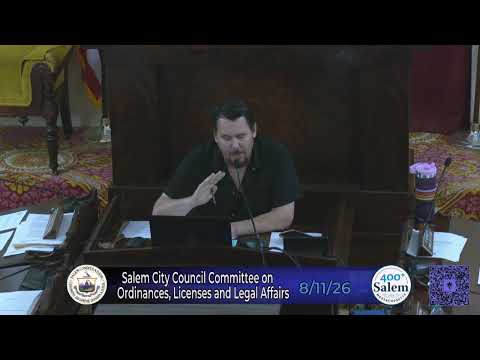
Salem City Council committee members and department heads spent the session reviewing draft zoning language intended to modernize the city's home-occupation rules and reduce the need for repetitive zoning-board appeals. Chair opened the meeting saying the goal was to make reasonable home-based uses allowed "by right" where they do not create neighborhood impacts, and to move a revised draft toward a planning-board review.
City Solicitor James Wellick urged caution about overly prescriptive lists, saying long enumerations of permitted professions can complicate enforcement and interpretation. "I would think about what we currently have for an ordinance and what problems we are running into," he said, arguing a clear definition with characteristics of a home occupation would be more enforceable. Health and building staff emphasized practical constraints: certain cottage-food activities require health permits and residential kitchens have equipment and separation requirements.
Councilors suggested several compromise paths: a short, enforceable definition with illustrative examples; a limited list of prohibited occupations (for activities like automotive repair that demonstrably harm neighborhoods); or a two-path model that makes low-risk, common micro-businesses by right while keeping higher-impact uses subject to special permit. Planning Director Tom Daniel recommended adding a short purpose statement and cross-references to existing traffic and health code provisions to avoid duplication and to synchronize department responsibilities.
The committee did not vote on zoning text but agreed it needs more staff-solicitor drafting and a joint public hearing. Chair said the matter will remain in committee to allow the city solicitor and department heads to align language and enforcement approaches.