Get Full Government Meeting Transcripts, Videos, & Alerts Forever!
Get email alerts on the Agriculture Tiling topic
No spam. Unsubscribe anytime.
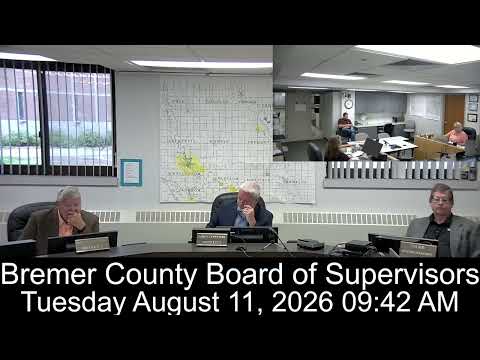
Bremer County approves e4 Crop Intelligence contract after lengthy tile and lease discussion
Summary
Supervisors approved a three-year service agreement with e4 Crop Intelligence and heard a detailed proposal to pattern-tile county fields A–C at an estimated $850 per acre, paired with a proposed nine‑year lease and shared-cost structure to fund drainage improvements.
Bremer County supervisors voted to approve a three-year service agreement with e4 Crop Intelligence after a detailed presentation on soil-fertility results, planting data and a proposed drainage/tiling plan for county-owned farmland.
Greg, lead presenter for e4 Crop Intelligence, recommended combining the county’s four fields into one tenant bid and said, “So what I would propose is a 9 year lease and a drainage improvement agreement.” Jared, e4’s crop specialist, reviewed maps and yields and reported that field‑by‑field data show room for improvement (for example, he cited an average yield of 244 bushels on some fields and 71 bushels per acre for field C soybeans). Jared also disclosed an operational problem: “field B actually did not get applied with fertilizer,” and said he and the co-op are working to “catch back up” this fall.
Supervisors discussed procurement and fairness concerns after staff shared a contractor’s bid. Board members raised the competitive-quote threshold and the need to protect or secure GPS as-built tile data from prior work; county attorney Darius flagged legal and procurement steps staff should complete before awarding any tile contract. Despite those procurement questions, the board approved the e4 services contract. As one supervisor moved, “I move to have you sign the agreement for e4 Crop Intelligence for the 3 year contract,” and the motion passed by voice vote.
Next steps assigned to staff include obtaining GPS as‑built data from Smith Excavating, having counsel review procurement limits and draft sample lease language incorporating cost‑share terms, and returning to the board with a timeline so bidding (and possible fall tile work) can proceed.