Get Full Government Meeting Transcripts, Videos, & Alerts Forever!
Get email alerts on the Land Use topic
No spam. Unsubscribe anytime.
Commissioners remand disputed building‑permit denial and direct staff to seek path for Loxahatchee River property
Summary
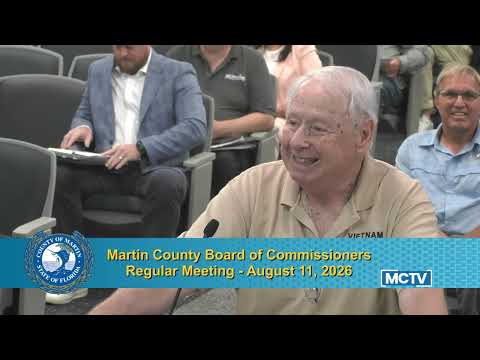
After a lengthy quasi‑judicial appeal, the board disagreed with the county administrator's denial of a building permit and voted 3‑2 to remand the matter to staff with instructions to work toward a solution and to create a pathway for the appellant to obtain a building permit.
Property owner and appellant Corey Beaton told the board he purchased the parcel at 18250 Southeast Loxahatchee River Road after relying on county guidance, surveys and the property appraiser's records, and he asked the board to reverse a county administrator's denial of his building permit. Beaton argued staff improperly relied on post‑hearing information and that the applicable comp‑plan policy (4.1 e 4) should be read to allow his recorded boundary, including submerged portions, to count toward the two‑acre minimum.
County staff and the county attorney countered that the county has long interpreted the relevant policy to count upland area from the mean high‑water line for density purposes and that there are state TIF deeds and other records indicating possible state interest in submerged lands. County Administrator Don Donaldson explained he did not find competent, substantial evidence in the administrative record to show private ownership of submerged lands and therefore upheld the denial. Growth Management director Paul Schilling and deputy director Pete Walden described past approvals that staff now consider mistakes but emphasized current practice requires counting upland only.
After extended questioning by multiple commissioners, a motion to disagree with the administrator's decision and remand the application for further staff review was made; commissioners then adopted a direction that staff work quickly with the applicant to find a pragmatic path forward and, in a subsequent board motion, directed staff to create a building permit pathway for the property. The final board action passed 3 to 2 (with two commissioners dissenting). The board tasked staff with exploring a land‑use/rezone avenue or other administrative options and to report back.
Why it matters: The case addresses how local land‑use policy treats submerged lands, how reliable private surveys and county records are in permitting, and the scope of administrative review—issues that may affect property owners, neighboring residents and future permit reviews.