Get Full Government Meeting Transcripts, Videos, & Alerts Forever!
Get email alerts on the Homelessness topic
No spam. Unsubscribe anytime.
Local volunteers press Martin County for 'Dignity Bus' and shelter action amid concerns about HB 1365
Summary
Volunteers from Tent City Helpers and City Helpers urged Martin County commissioners to support a mobile hygiene/shower 'Dignity Bus' and expanded shelter options, warning that Florida House Bill 1365 has criminalized public sleeping without creating local alternatives.
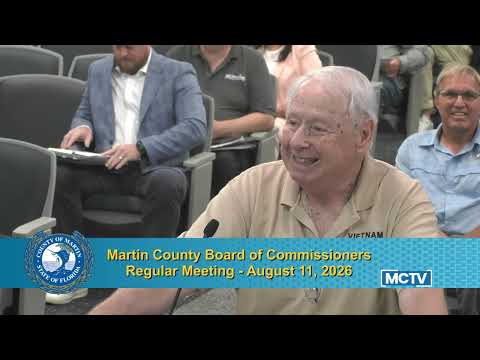
Speakers from local volunteer groups used public comment to press the county for concrete steps to assist unhoused residents and to ask commissioners to consider a county role in funding or hosting a mobile hygiene/shower van known locally as the "Dignity Bus." Angela Harrison of City Helpers said volunteers are applying for grants and asked the board to examine whether the county could help with parking, staffing and operating costs.
"My main concern is getting us the Dignity bus. We are applying for a grant...we thought that it would be an amazing idea to contribute that $100,000 for salaries for the Dignity bus," Angela Harrison said. Victoria Blake of Tent City Helpers urged the county to act on shelter needs and highlighted the impact of a new state law: "House bill 1365...says it is illegal to sleep in public properties...Martin County has nowhere. We have nowhere for the unhoused to go." These comments included a specific tally from Blake: "Since January of this year, we have seen 290 individual unhoused."
Board members acknowledged the policy constraints created by the state law and the cost and service‑requirements the statute imposes. County staff explained that under current state rules a designated camping site requires multiple support services and that meeting those obligations can be expensive. Several commissioners signaled interest in learning more about mobile hygiene options and directed staff to explore practical, grant‑backed steps that would not run afoul of state requirements.
Why it matters: Speakers say the new state statute has made local responses more urgent, and volunteers urged the board to prioritize small, achievable interventions—like the Dignity Bus and partnerships with nonprofits—rather than waiting for a comprehensive funding package.