Get Full Government Meeting Transcripts, Videos, & Alerts Forever!
Get email alerts on the Water Affordability topic
No spam. Unsubscribe anytime.
NAACP counsel urges DeKalb to adopt two-year, income-based water debt forgiveness to help households with $104M in arrears
Summary
David Wheaton of the NAACP Legal Defense Fund presented a proposed ordinance to forgive past-due water balances for customers at or below 60% AMI in exchange for two years of consistent on-time payments (a monthly 1/24th credit), arguing the county faces more than $100 million in residential unpaid water bills and should adopt a faster forgiveness schedule than the county plan.
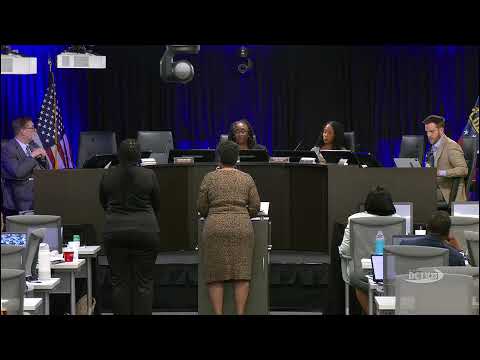
David Wheaton, an attorney with the NAACP Legal Defense and Education Fund, told the committee that rising water costs have left many DeKalb residents with longstanding arrears and asked the county to adopt an ordinance that would pair affordability with debt forgiveness.
"There's over a $100,000,000 in unpaid water debt, here in DeKalb County," Wheaton said, describing a proposed structure that would offer full debt relief to eligible customers after two years of timely payments under a WRAP enrollment. Under the advocates' model, each on-time monthly payment would reduce a customer's prior balance by 1/24th until the arrearage is cleared; the program would target households at 60% AMI or below and include shutoff protections and a seven-year cap on the period the county may pursue older balances.
Wheaton compared the proposal to programs in Chicago and Philadelphia, noting high completion rates and sizable debt canceled in those cities, and said advocates want a structure that accelerates relief while encouraging timely payments. Commissioners pressed for DeKalb-specific data on how many accounts would qualify at 60% AMI, how far back the county is collecting debt and the fiscal impact on revenue and credit rating. The chair and several commissioners asked staff and advocates to prepare avatar household scenarios, quartile analyses and a pilot comparison of the county's current pay-1-get-1 approach versus the advocates' two-year model to inform an evidence-based decision.
No ordinance vote occurred at the committee; staff agreed to return with modeling, the internal-audit report referenced in prior briefing materials and options for piloting different approaches.