Get Full Government Meeting Transcripts, Videos, & Alerts Forever!
Get email alerts on the Vote Centers topic
No spam. Unsubscribe anytime.
Board hears proposal to study countywide vote centers as a way to save election-day costs
Summary
Reverend Eugene Beverly proposed studying countywide vote centers that would allow voters to cast ballots at any polling site on election day; he said the model could reduce lines and save Richmond County tens of thousands of dollars per election but noted state law currently requires precinct-assigned voting.
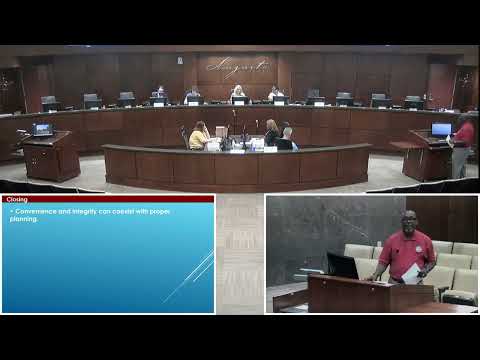
Reverend Eugene Beverly presented a plan for countywide ‘‘vote centers’’ that would let Richmond County voters cast ballots at any designated polling location on election day rather than being required to report to an assigned precinct. Beverly said the change could reduce travel time, shorten lines and improve resource allocation, and he estimated one large election could save the county about $65,000–$70,000 and that multi-election savings might approach seven figures.
"I truly believe that convenience and integrity can coexist with proper planning," Beverly said, urging the board to study the model and reach out to employers and stakeholders about potential impacts. Beverly noted about 21 states already use a voting-center model and argued Richmond County’s commuter patterns—residents who live in South and West Augusta but commute to job centers—make the model worth examining.
Board members welcomed the data but repeatedly noted a legal constraint: under current Georgia law, voters generally must cast election-day ballots at their assigned precincts. The board chair, speaking from experience as a former election administrator, said, "I have coveted having vote centers and wish that Georgia would implement laws that would permit us to do it," and recommended engaging the county’s legislative delegation if the board wants to pursue the change.
Members also questioned some of the economic assumptions Beverly cited—particularly the $27.60 hourly figure used in his savings estimates—and asked staff to verify sources before presenting the data to legislators. The discussion closed with members encouraging further study and public education but recognizing the change would require state authorization before it could be implemented locally.