Get Full Government Meeting Transcripts, Videos, & Alerts Forever!
Get email alerts on the Property Taxation topic
No spam. Unsubscribe anytime.
How Hillsborough property tax rates are calculated, county official says
Summary
County tax administrator Charles Aker told Hillsborough residents that the tax rate is a mathematical result of total levies divided by total assessed value and that levies — not assessments — drive changes in tax bills.
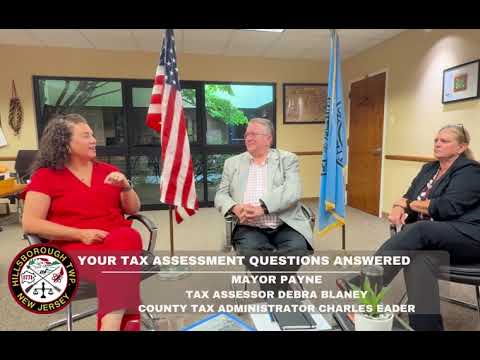
The mayor introduced county tax administrator Charles Aker and tax assessor Deborah Blaney to explain recent questions about whether the township committee’s vote on the board of education budget caused residents’ tax increases. Charles Aker said the tax rate is calculated by dividing the total levies set by taxing entities by the town’s total assessed value and applying that rate to each property’s assessment.
"It's all a math exercise," Aker said, adding that levies from entities such as the school district, county and fire district determine whether tax bills rise or fall. He emphasized that assessments and levies are separate steps: assessments estimate market value, while levies — the dollar amounts requested by each taxing body — set the pie that gets divided.
Aker told residents that if assessments across the town rise broadly, the tax rate generally falls because the same levy is spread over a larger assessment base. That dynamic, he said, underscores why people may see different outcomes after reassessments even when individual assessment values increase.
The explanation aimed to redirect residents with concerns about their tax bills to the specific taxing authorities — most notably the school board — since "about 60% of your tax bill goes directly to the school," Aker said.