Get email alerts on the ALPR Cameras topic
No spam. Unsubscribe anytime.
Council adopts $38,497 budget amendment for regional ALPR camera program
Summary
The council adopted Resolution No. 1420 to increase FY 2026–27 appropriations by $38,497 for one-time camera replacement, installation, maintenance and communications for the regional automated license plate recognition (ALPR) program; staff said Rancho Palos Verdes manages the regional contract and invoices arrived late due to staffing turnover there.
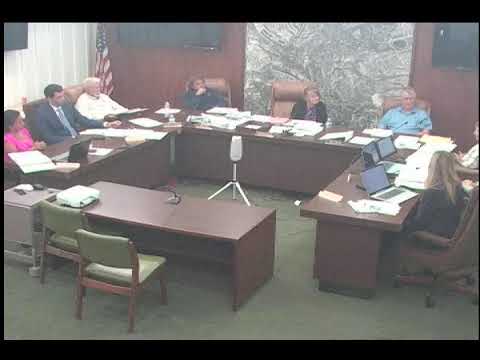
The Rolling Hills Estates City Council on Aug. 10 adopted Resolution No. 1420, authorizing a fiscal-year 2026–27 budget modification to increase appropriations by $38,497 in the general fund for onetime ALPR camera replacement, installation, ongoing maintenance and annual connectivity costs.
Staff explained the expense resulted from invoices managed through a regional contract administered by the City of Rancho Palos Verdes; staffing turnover there delayed billing and the city received multiple invoices only shortly before the council packet was published. Staff said they will create internal triggers to ensure future invoices do not "fall through the cracks."
Council members asked policy questions about privacy and the future of ALPR technology. Staff noted the city contracts with the sheriff’s department for public-safety services and that "we do not retain, capture, or withhold any data that's collected through these ALPR cameras. They're retained and monitored at the sheriff's department," staff said. Council asked the city manager to check the cost-share formula (the staff report cited a 7% cost share for ALPR communications) relative to other contract formulas in the sheriff agreement.
After public comment closed with none, a motion to adopt the resolution carried on a voice vote.
AI generated
The text on this page is AI generated. Summaries, highlights, analysis, and video transcripts are all produced from the original source material.
AI can make mistakes, so if you spot one, and we will fix it for everyone.
Note: the source content is unaltered by us. Any content source we link to, be it a video, an audio recording, or a document, is presented exactly as its publisher released it. That publisher is usually a government body, sometimes an individual official or another organisation.