Get email alerts on the Federal Funds Transparency topic
No spam. Unsubscribe anytime.
Committee backs bill to create legislative overview for large federal funds
Summary
The committee passed HB 1131 (LC 28), which would create a nine-member legislative overview body (modeled on One Georgia Authority) to compile and publish information on large federal funding streams such as CARES, ARPA and infrastructure funds; sponsors said it complements federal oversight and relies on existing staff resources.
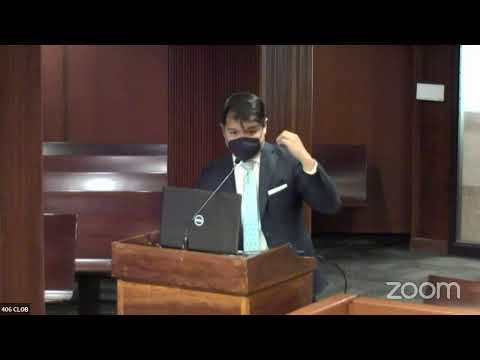
The State Planning & Community Affairs Committee on Feb. 9 approved HB 1131 (LC 28), a bill to create a legislative overview mechanism to give legislators and the public more transparent access to information about large federal funding streams entering Georgia. Representative Lim, who sponsored the bill, said the measure is patterned after the One Georgia Authority oversight structure and is intended to help constituents and local entities find and understand federal funds that affect their communities. "This bill essentially does is to ensure that our local georgia citizens and taxpayers have as much access to information about these large sums of federal money that are coming here," Lim said.
Lim said the mechanism would be limited to major one-time emergencies or formula funding over specified thresholds and would not change the governor’s authority to decide how funds are expended. She argued the state-level body would "complement" federal oversight — for example, U.S. Treasury rules for ARPA set spending rules but do not always make the administration or transparency questions easy to access at the local level. Lim also described the proposed board: three House members, three Senate members and three designees from the governor’s office, supported by existing staff in the House Budget and Research Office and Senate Budget and Research Office so the bill would not carry a fiscal impact.
Committee members pressed sponsors on how often the committee would report and whether interim information would be public. Lim said the bill uses "periodically" to allow flexibility because funds do not arrive on a set schedule, but that the committee would submit an annual report on or before Jan. 1 and could issue other reports "as it seems to be of public interest." She added the committee’s proceedings and reports would be made public online. After discussion and support from members who noted underserved communities and the need to reduce duplication of funding, a member moved a "do pass" motion; the motion was seconded and the committee voted to pass HB 1131.
AI generated
The text on this page is AI generated. Summaries, highlights, analysis, and video transcripts are all produced from the original source material.
AI can make mistakes, so if you spot one, and we will fix it for everyone.
Note: the source content is unaltered by us. Any content source we link to, be it a video, an audio recording, or a document, is presented exactly as its publisher released it. That publisher is usually a government body, sometimes an individual official or another organisation.