Get Full Government Meeting Transcripts, Videos, & Alerts Forever!
Get email alerts on the Taxes topic
No spam. Unsubscribe anytime.
Residents decry proposed tax hike, question budget priorities and transfers
Summary
During two public-comment periods dozens of residents urged the Big Spring board to reject or reduce the real-estate tax increase, cited families falling behind on property taxes, and asked why $75,000 was moved out of contracted psychological services into professional services.
Multiple residents used the board’s public-comment periods to urge the board to reconsider a multi-percent tax increase, to explain local hardship, and to demand transparency about recent budget transfers.
Laura Mackey contrasted tax choices with household sacrifices: "How many of you would tell your child we're going to skip your birthday… because we're not making enough money and our taxes are too high?" She and other commenters said higher property taxes drive families to food insecurity and that many households are already delinquent on taxes.
Aaron Shaffer asked the board to explain a line transfer: "On April 21st of this year the district transferred over $75,000 out of the contracted psychological, behavioral, and educational support services and they moved it to the professional services budget." He requested a public accounting for why the transfer occurred and how the funds will be used.
Sharon McDonald provided a neighborhood-level tally, saying 297 households in the district are delinquent on property taxes across named townships and urged the board to consider the risk of homelessness for seniors and families if taxes increase. Several commenters asked the board to identify specific cuts rather than asking taxpayers to shoulder another increase.
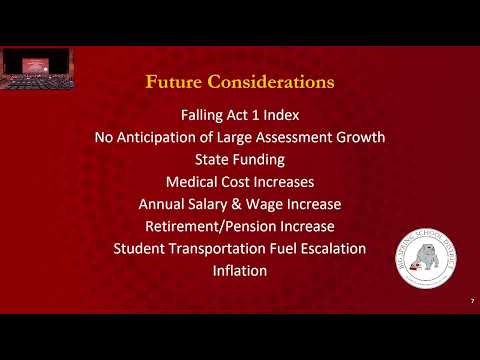
Board members acknowledged the concerns and noted the budget process will continue to include additional reporting; they also pointed to state funding uncertainty and enrollment declines as complicating factors in long-term planning.