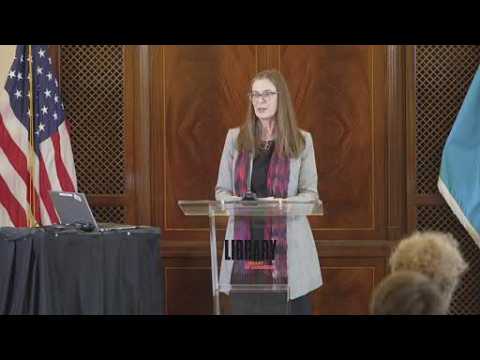
Dr. Lisa Rathje: Teaching with folk sources builds students' critical inquiry
Summary
At the Library of Congress Botkin Lecture, Dr. Lisa Rathje argued that grounding classrooms in local primary sources—oral histories, photos, songs—gives students tools to observe, inventory assumptions, and develop inquiry-based learning that respects cultural complexity.
Dr. Lisa Rathje, executive director of Local Learning, told an audience at the Library of Congress’s American Folklife Center that teaching with folk sources gives students opportunities to build critical thinking and “practice unmediated experiences.” She said classroom work that begins with local folk materials helps students move beyond test-driven answers to nuanced interpretation and civic understanding. "It is through teaching with folk sources," Rathje said, stressing that these materials let learners analyze cultural complexity rather than default to right-or-wrong judgments.
Rathje outlined practical classroom routines adapted from established inquiry frameworks—observe, inventory assumptions, then develop questions—that she and her partners use to scaffold lessons. She emphasized starting with teachers and local collections to make primary sources accessible in ways that respect context and invite student agency. The lecture closed with audience questions about piloting and how students respond; Rathje said teacher-led pilots typically show stronger student engagement when sources are local and relatable.
AI generated
The text on this page is AI generated. Summaries, highlights, analysis, and video transcripts are all produced from the original source material.
AI can make mistakes, so if you spot one, and we will fix it for everyone.
Note: the source content is unaltered by us. Any content source we link to, be it a video, an audio recording, or a document, is presented exactly as its publisher released it. That publisher is usually a government body, sometimes an individual official or another organisation.