Get email alerts on the Homelessness Prevention topic
No spam. Unsubscribe anytime.
Chairman Carpenter introduces House Bill 689 to create state homelessness-prevention program
Summary
At the State Planning & Community Affairs committee on March 3, Chairman Carpenter introduced House Bill 689 to establish an eviction-prevention homelessness program under DCA; the committee voted a do-pass recommendation and referred funding to Appropriations.
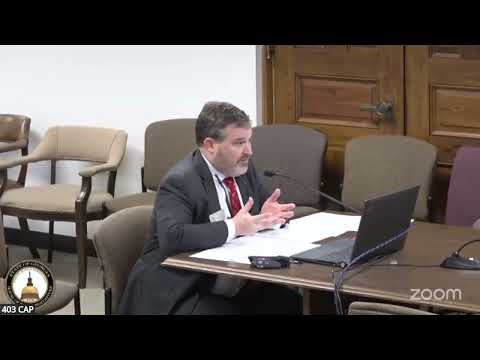
Chairman Carpenter told the State Planning & Community Affairs committee on March 3 that House Bill 689 would establish a homelessness prevention program under the Department of Community Affairs (DCA) to extend work begun with federal ARPA emergency rental assistance. "House Bill 689 seeks to establish a homelessness prevention program under the direction of DCA," he said.
Carpenter described the measure as a framework that would allow the state to fund grants to local organizations and to leverage local government and private-sector buy-in. He said the bill would not itself appropriate money; any state funding would require action through the Appropriations process. "It just provides a mechanism for for what for how this will occur and will only happen if the appropriation committee sees it fit," Carpenter said.
The bill’s scope, as explained to the committee, focuses on eviction-prevention assistance rather than programs aimed primarily at people already homeless. Committee members asked whether preparations could begin during the session and were told implementation conversations would be handled through DCA and Appropriations if lawmakers choose to request funding.
AI generated
The text on this page is AI generated. Summaries, highlights, analysis, and video transcripts are all produced from the original source material.
AI can make mistakes, so if you spot one, and we will fix it for everyone.
Note: the source content is unaltered by us. Any content source we link to, be it a video, an audio recording, or a document, is presented exactly as its publisher released it. That publisher is usually a government body, sometimes an individual official or another organisation.