Get email alerts on the Attacks On Aid Workers topic
No spam. Unsubscribe anytime.
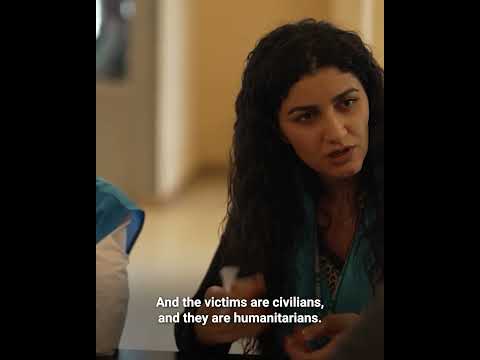
Presenter warns technology is fueling attacks on humanitarian workers, calls for accountability
Summary
A presenter cautioned that modern technological advances are increasingly enabling attacks on civilians and humanitarian workers, referenced the Canal Hotel bombing 23 years ago, and urged safeguards so "technology does not outpace humanity and accountability."
A presenter said that attacks on humanitarian workers amount to attacks on the whole humanitarian movement and warned that new technologies are changing how such violence occurs.
"An attack on any one of us in our humanitarian movement is an attack on all of us," the presenter said, invoking a collective framing for the risk faced by aid workers and civilians. The presenter referenced the Canal Hotel bombing 23 years ago as the origin of the day of remembrance and said those tragedies are now happening "day-to-day."
The presenter argued that recent violence is "increasingly powered by a chilling alliance between technological ingenuity and modern warfare," and urged policymakers and practitioners to ensure that, as the global economy moves "on a war footing," weapons and technologies are used and trained responsibly. "We need to ensure...that technology does not outpace humanity and that technology does not outpace accountability," the presenter said.
No formal actions or votes were recorded in the provided transcript excerpt. The remarks emphasized the humanitarian and civilian toll of evolving forms of violence and called for strengthened accountability mechanisms.
AI generated
The text on this page is AI generated. Summaries, highlights, analysis, and video transcripts are all produced from the original source material.
AI can make mistakes, so if you spot one, and we will fix it for everyone.
Note: the source content is unaltered by us. Any content source we link to, be it a video, an audio recording, or a document, is presented exactly as its publisher released it. That publisher is usually a government body, sometimes an individual official or another organisation.