Get email alerts on the Drones And Humanitarian Safety topic
No spam. Unsubscribe anytime.
UN humanitarian chief: armed drones are normalizing violence against aid workers
Summary
Tom Fletcher, the UN Emergency Relief Coordinator, said cheap armed drones are 'normalizing' attacks on civilians and humanitarian workers and urged member states and manufacturers to ensure accountability and respect for international humanitarian law.
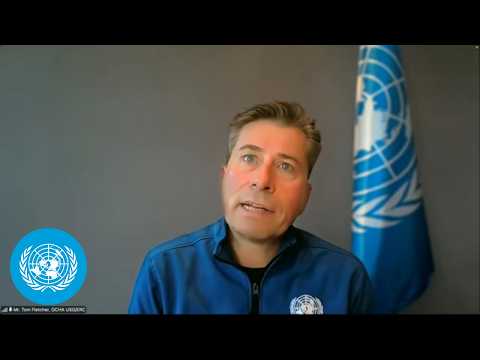
Tom Fletcher, the United Nations Emergency Relief Coordinator and Under‑Secretary‑General for Humanitarian Affairs, warned on World Humanitarian Day that armed drones are becoming a routine source of lethal risk for aid workers and civilians.
"This is the normalization of violence against our community, and we will not accept it," Fletcher said, urging governments and companies to act to prevent further killings of humanitarian personnel.
Fletcher said nearly a thousand aid workers have been killed, injured or kidnapped in the period he cited and described a pervasive sense of impunity for those "who pulled the trigger, those who gave the order, those who supplied the weapon." He called for robust investigations by member states and stronger enforcement of international humanitarian law.
While acknowledging drones can have humanitarian uses—such as delivering vaccines—Fletcher stressed that much of the current use is "inhumane and reckless" and warned that cheaper, widely available munitions are extending the reach of war.
He urged a three-part response: improved protection for humanitarian personnel in the field, state-led investigations and accountability, and a dialogue with companies that manufacture and supply drone technology to ensure compliance with humanitarian law.
The briefing—delivered from Kyiv—focused on how the proliferation of inexpensive armed drones has altered frontline dynamics and increased risks for local responders and international staff.
AI generated
The text on this page is AI generated. Summaries, highlights, analysis, and video transcripts are all produced from the original source material.
AI can make mistakes, so if you spot one, and we will fix it for everyone.
Note: the source content is unaltered by us. Any content source we link to, be it a video, an audio recording, or a document, is presented exactly as its publisher released it. That publisher is usually a government body, sometimes an individual official or another organisation.