Get email alerts on the Housing topic
No spam. Unsubscribe anytime.
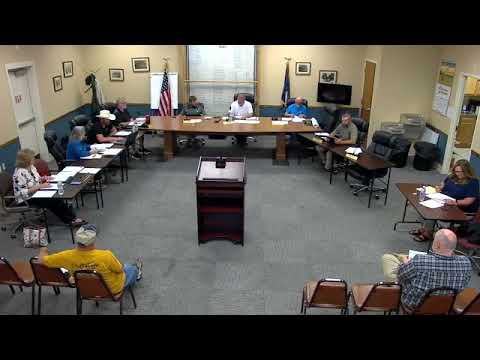
Court Hears First Reading on Manufactured-home Compatibility Rules After State Law Change
Summary
Following Kentucky's House Bill 160, the court received a first reading of proposed amendments to R-1, R-2 and R-3 zoning sections to incorporate 'qualified manufactured homes' while adding compatibility standards such as roof pitch, minimum living area and a 1/8-mile exterior-material radius.
Spencer County officials presented a first reading of proposed zoning-code revisions intended to implement state changes that classify certain manufactured homes as 'qualified manufactured homes' and therefore single-family dwellings.
Planning staff explained that House Bill 160, effective July 1, requires qualified manufactured homes to be treated as single-family dwellings. To preserve neighborhood compatibility, the draft local standards include a minimum roof pitch (5:12), a minimum living area (900 square feet in some districts), exterior cladding similar to homes within a one‑eighth‑mile radius, and minimum lot-size adjustments where on‑site sewage systems are used. Staff emphasized this was a first reading and that the court and planners would need to advertise and time a second reading to follow statutory notice requirements.
Several members asked staff for more information on septic-system failures and the commission's rationale for proposed two-acre minimums where on-site sewage is used. Staff said they could compile failure counts and bring documentation before the second reading. The court did not adopt the ordinance on first reading; staff said the next steps are to circulate the draft and schedule formal notice and a second reading.
AI generated
The text on this page is AI generated. Summaries, highlights, analysis, and video transcripts are all produced from the original source material.
AI can make mistakes, so if you spot one, and we will fix it for everyone.
Note: the source content is unaltered by us. Any content source we link to, be it a video, an audio recording, or a document, is presented exactly as its publisher released it. That publisher is usually a government body, sometimes an individual official or another organisation.