Get email alerts on the Zoning topic
No spam. Unsubscribe anytime.
Council amends parallel-fence rule to allow exceptions for easements and permanent infrastructure
Summary
Council approved an amendment to Chapter 14, Section 33 to address 20-foot parallel-fence separation in easements; staff will have latitude to permit exceptions for drainage infrastructure and other permanent facilities, and residents affected will be able to seek variances.
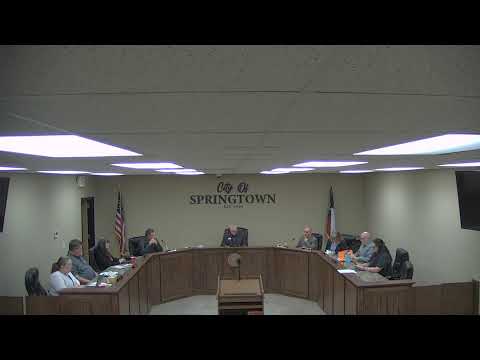
The Springtown City Council voted to amend the city’s parallel-fence ordinance to address situations where a strict 20-foot separation standard conflicts with drainage easements or other permanent infrastructure.
Miller explained the change was prompted by neighborhood complaints and would avoid forcing property owners to move fences into yards when a drainage easement reduces available space. Staff said the ordinance specifically preserves a 20-foot requirement for drainage infrastructure but allows staff latitude to approve exceptions for other permanent infrastructure and to direct residents to a variance process if needed. "So basically, it gives staff you the latitude in any other permanent form of infrastructure because there's just not a possible way to list out every potential," a staff member said.
Councilors debated whether to include this change now or fold it into a broader comprehensive zoning rewrite planned to start in March; several members said residents who face immediate issues would be better served by amending the ordinance now and using the variance process for interim relief. A motion to approve the ordinance was moved and seconded; council approved the change.
AI generated
The text on this page is AI generated. Summaries, highlights, analysis, and video transcripts are all produced from the original source material.
AI can make mistakes, so if you spot one, and we will fix it for everyone.
Note: the source content is unaltered by us. Any content source we link to, be it a video, an audio recording, or a document, is presented exactly as its publisher released it. That publisher is usually a government body, sometimes an individual official or another organisation.