Get email alerts on the Staffing topic
No spam. Unsubscribe anytime.
Board weighs 0‑based staffing, class‑size ratios as possible solution to deficit
Summary
Trustees discussed staffing models that would match teacher FTEs to current enrollment (0‑based staffing) and preserve core program ratios; staff warned the draft implies large FTE reductions unless other actions or fund balance use are approved.
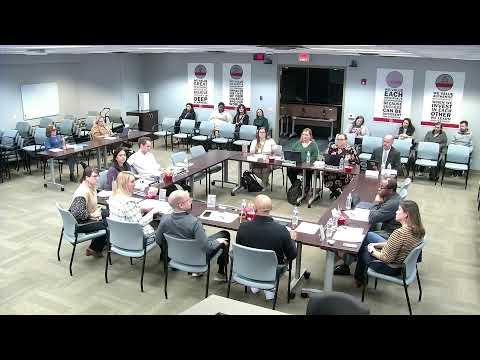
District leaders walked trustees through how a 0‑based staffing model would be applied and what it means for classroom ratios and FTE counts. "At an $80,000 average position, that's 82 positions overstaffed," Dr. Singh explained, using the $80,000 average position assumption to help trustees conceptualize personnel impacts tied to the projected deficit.
Board members asked for campus‑by‑campus calculations. Staff confirmed secondary staffing reviews are complete and elementary staffing sessions were rescheduled to the following week; trustees were told that after transfer windows and the next round of staffing meetings staff will produce exact FTE counts linked to the different budget scenarios.
Trustees also probed practical implications for families: how staffing fewer sections would affect class placement during summer enrollment changes and whether boundary adjustments or bond projects (to reduce ongoing shuttle costs, for example) could mitigate some program and transportation impacts. Staff said many of the operational changes (contract renegotiations, shuttle reductions) are being explored but that reachable savings will require coordinated decisions across programs and facilities.
AI generated
The text on this page is AI generated. Summaries, highlights, analysis, and video transcripts are all produced from the original source material.
AI can make mistakes, so if you spot one, and we will fix it for everyone.
Note: the source content is unaltered by us. Any content source we link to, be it a video, an audio recording, or a document, is presented exactly as its publisher released it. That publisher is usually a government body, sometimes an individual official or another organisation.