Get email alerts on the Public Safety topic
No spam. Unsubscribe anytime.
Unitil engineers describe layered safety systems after residents cite explosion risks
Summary
Unitil representatives told the planning board the proposed station includes bollards, perimeter barriers and internal pressure controls — including a fire valve and check valve — to limit sustained releases, and said ignition from a cigarette in open air is unlikely.
Residents raised historical examples of gas facilities failing if struck by vehicles, and Unitil engineers responded with technical descriptions of protective systems at the planned station.
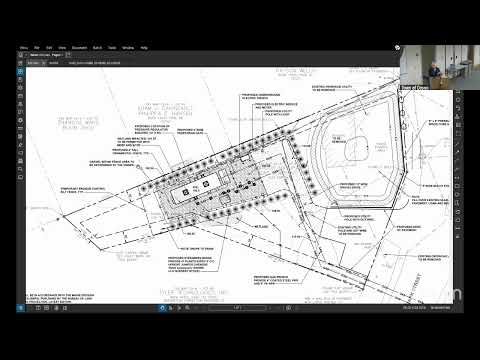
At the request of board members, a Unitil principal engineer (Speaker 8) and Mark Dupuy, Unitil’s director of gas system and transmission operations (Speaker 9), described vehicle protections and internal shutdown devices. Speaker 8 said there will be "some vehicle protection that align the front of the building, which will keep vehicles from, impacting any of our facilities within the gated area." The applicant also proposed decorative boulders that the applicant said could be sized to act as barriers at the curb cut.
Mark Dupuy explained ignition parameters and redundant safety features. "Natural gas by virtue is lighter than air," Dupuy said, adding that free gas in open air generally does not reach the gas–air ratio required for ignition and that "there are devices in here that are meant to actually control the flow of the gas and stop it from flowing" if a rupture occurs. He also described a fire valve that melts and shuts off gas flow when exposed to flame and said check valves prevent backfeed from the distribution system.
Board members sought written specifications to ensure the boulders and bollards will impede a vehicle; the applicant agreed to provide minimum diameter and height measurements. The planning board subsequently added a condition requiring that boulders placed on the lot be large enough to impede accidental or purposeful vehicular impact.
The board and residents still pressed questions about worst-case scenarios, but the applicant’s technical description provided the basis for the board’s vehicle-protection condition.
AI generated
The text on this page is AI generated. Summaries, highlights, analysis, and video transcripts are all produced from the original source material.
AI can make mistakes, so if you spot one, and we will fix it for everyone.
Note: the source content is unaltered by us. Any content source we link to, be it a video, an audio recording, or a document, is presented exactly as its publisher released it. That publisher is usually a government body, sometimes an individual official or another organisation.