Get email alerts on the Economic Development topic
No spam. Unsubscribe anytime.
Board delays vote on Pima County economic development strategic plan, schedules study session
Summary
Supervisors voted to continue adoption of the county economic development strategic plan to Sept. 22 and requested a study session to focus on targeted industries, rural inclusion, KPIs and small-business priorities.
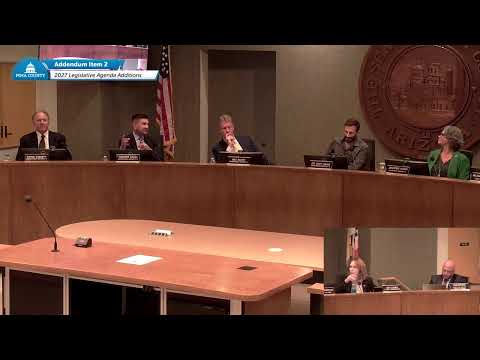
The Pima County Board of Supervisors voted on Aug. 25 to continue consideration of the county economic development strategic plan to Sept. 22 and asked staff to place a focused study session on targeted industries and metrics.
The board’s member who moved the continuance said the plan "matters a whole lot" and emphasized the need to fully discuss targeted industries, rural priorities and key performance indicators before final adoption. Several supervisors urged the agenda committee to streamline the Sept. 8 study session so the economic-development discussion is not crowded out by other items.
Key requests included stronger attention to rural and unincorporated areas, clearer KPIs to measure progress, and deeper integration of the county’s Prosperity Initiative and small-business supports. One supervisor asked staff to clarify whether the plan’s recommended targeted industries truly reflect Pima County priorities and to provide more detail on the logic model linking programs to outcomes.
The continuation will allow staff to prepare the requested KPI definitions, a targeted-industries briefing and follow-up memos that supervisors said would help finalize the plan at a subsequent meeting.
AI generated
The text on this page is AI generated. Summaries, highlights, analysis, and video transcripts are all produced from the original source material.
AI can make mistakes, so if you spot one, and we will fix it for everyone.
Note: the source content is unaltered by us. Any content source we link to, be it a video, an audio recording, or a document, is presented exactly as its publisher released it. That publisher is usually a government body, sometimes an individual official or another organisation.