Get email alerts on the Air Quality topic
No spam. Unsubscribe anytime.
Board debates idling ordinance, AI enforcement and surveillance concerns
Summary
Members weighed adding vehicle-idling reduction KPIs and discussed measurement and enforcement challenges — including the use of cameras/AI — while flagging equity and privacy trade-offs; a board member also raised concerns about data-center incentives at the state level.
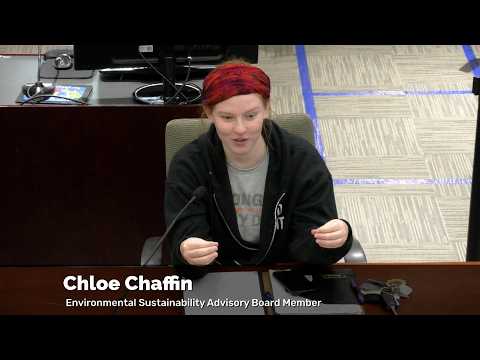
The board considered whether to include a KPI targeting vehicle idling. Members described measurement difficulties and enforcement trade-offs and advocated for a community-focused rollout emphasizing education and warnings rather than immediate penalties. Several members suggested initial measurement at school pickup zones and incremental steps before considering punitive enforcement.
"If you really wanna eliminate idling, we probably could — AI could theoretically do that," one board member said while others warned against surveillance and punitive approaches that could harm single parents. The conversation broadened to regional policy when a member cited Kansas Senate Bill 98 (passed in the 2025 legislative session) offering broad tax abatements for data‑center construction, saying the board should consider environmental consequences of such incentives.
The board directed staff to retain idling and air-quality tracking in the compendium but to treat them as lower-priority KPIs pending feasibility and measurement options; members also recommended pilot measurement approaches (PurpleAir sensors, school audits) rather than immediately adopting enforcement mechanisms.
AI generated
The text on this page is AI generated. Summaries, highlights, analysis, and video transcripts are all produced from the original source material.
AI can make mistakes, so if you spot one, and we will fix it for everyone.
Note: the source content is unaltered by us. Any content source we link to, be it a video, an audio recording, or a document, is presented exactly as its publisher released it. That publisher is usually a government body, sometimes an individual official or another organisation.