Get email alerts on the Technology And Privacy topic
No spam. Unsubscribe anytime.
Council discusses license‑plate readers, privacy concerns and data‑center misconceptions
Summary
Council members and staff discussed license‑plate‑reader technology and community questions; police representatives said Flock software does not store data and that agencies retain limited records, and an informational meeting in Wilmington was announced for Sept. 2.
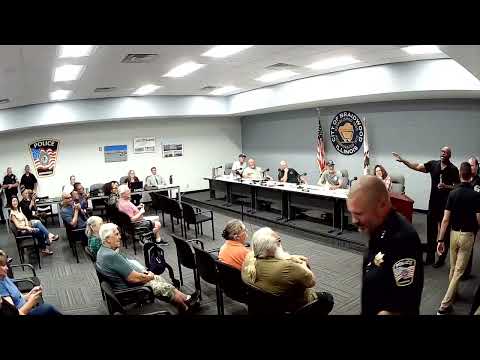
Public‑works and police representatives addressed resident questions about license‑plate‑reader (LPR) systems and broader data‑center concerns. A public‑works official announced an informational meeting in Wilmington on Sept. 2 for residents with questions about LPR systems and other camera technologies.
A police representative said Flock’s product does not itself store data and that retention and access are controlled by the agency: "Flock does not store data. They can't store the data. We store the data. It's our data that we stored." Officials acknowledged that officer misuse has occurred in the past, said policies are in place to track runs, and encouraged residents to attend the Wilmington meeting for more detail.
Separately, councilmembers discussed that modern data centers are more efficient than older descriptions often suggest and that the water and electricity use cited in social media posts may be overstated.
AI generated
The text on this page is AI generated. Summaries, highlights, analysis, and video transcripts are all produced from the original source material.
AI can make mistakes, so if you spot one, and we will fix it for everyone.
Note: the source content is unaltered by us. Any content source we link to, be it a video, an audio recording, or a document, is presented exactly as its publisher released it. That publisher is usually a government body, sometimes an individual official or another organisation.