Get email alerts on the Hb43 topic
No spam. Unsubscribe anytime.
Committee hears contested testimony on HB43 as tribes dispute codified mailing address
Summary
Representative Marvin Lim presented HB43 to ensure tribal representation on the state council and to update codified tribal addresses. Multiple witnesses from state-recognized groups testified that the bill as drafted would substitute a mailing address without their consent and could affect program access; the committee ultimately tabled the bill for further work.
Representative Marvin Lim presented HB43 (LC442156), saying the bill would "ensure that the council's membership will always have representation by at least 1 member from each of our state recognized tribes" and update codified mailing addresses for the three state-recognized tribes. He framed the bill as a reintroduction of measure that previously passed the House but "ran out of time in the senate."
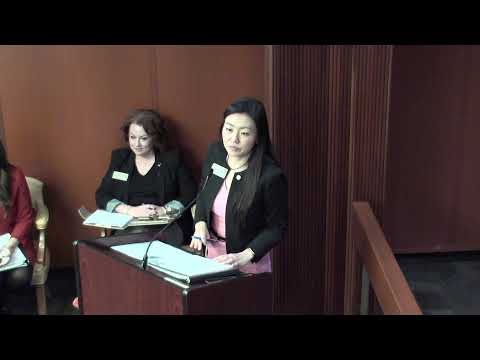
Several witnesses from groups that identify as Georgia state-recognized tribes testified in opposition to parts of the draft that would change the mailing address listed in state code. Richard Botts, introduced as "chairman for the Georgia Tribe of Eastern Cherokee," said the tribe did not request an address change and warned that changing the codified address would cut his group off from federal and state opportunities: "This means that the names listed in the tribes and their addresses are the same as a copyright...If you take state recognition away, it kinda cuts us out of that equation." He told the committee his organization uses PO Box 1993 and "we did not ask for an address change. We did not do that. We had nothing to do with that."
Other witnesses expanded on the documentary record. Tribal council member Wallace Seabolt said he had material showing a private corporation (named in testimony as GTEC Federal Services Company) had sought to use a similar name and argued the council's consultant had been fraudulent; he said his group holds trademark and post office documentation that supports their mailing address. Johnny Chattin offered an alternate approach, telling the committee he had prepared language to preserve PO Box 1993 for the group present while allowing a Chickamauga designation without removing the existing address.
Donald Kirkland, vice chair of the Georgia Council on American Indian Concerns, replied for the council and emphasized the council's advisory role: "The legislator recognizes and does not recognize state recognize tribes. That is not our responsibility," he said, adding the council had completed a 130-page study requested in 2007 and that sworn testimony and a Lumpkin County superior court ruling were among its supporting materials.
After extended questioning about who each group recognizes as principal chief, who controls the contested PO boxes, and how federal and state benefits might be affected, Representative McLean moved to table HB43 so legislators and stakeholders could pursue separate or amended legislation; the motion was seconded and carried by voice vote. The chair asked staff and interested parties to work on possible mechanisms, including whether separate legislation could add a fourth recognized tribe or otherwise resolve address and recognition disputes.
AI generated
The text on this page is AI generated. Summaries, highlights, analysis, and video transcripts are all produced from the original source material.
AI can make mistakes, so if you spot one, and we will fix it for everyone.
Note: the source content is unaltered by us. Any content source we link to, be it a video, an audio recording, or a document, is presented exactly as its publisher released it. That publisher is usually a government body, sometimes an individual official or another organisation.