Get email alerts on the Surveillance Policy topic
No spam. Unsubscribe anytime.
Knox County Commission bans fixed ALPR cameras, halts ARC and orders county data purged
Summary
The Knox County Commission unanimously adopted an emergency ordinance prohibiting fixed automated license‑plate readers countywide, ordered non‑authorized surveillance disabled within 30 days and required destruction of county‑held surveillance data (except for active investigations) until the sheriff presents a data‑driven plan for any future system.
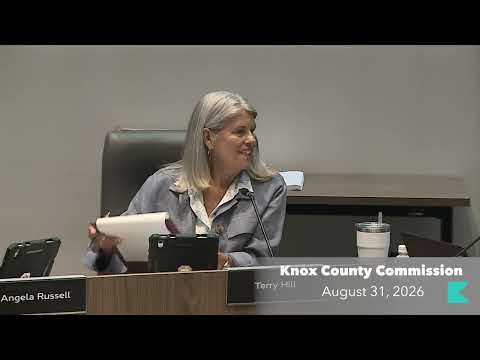
The Knox County Commission voted unanimously Aug. 31 to adopt an emergency ordinance that prohibits county departments from purchasing or operating fixed automated license‑plate reader (ALPR) systems and requires that non‑authorized surveillance systems be disabled and removed within 30 days.
"It is time to end mass surveillance in Knox County, period," Commissioner Jay said during debate, urging a full reset after an internal audit and procurement concerns. The ordinance includes an amendment that keeps the county’s Advanced Research and Communications Center (ARC) closed until the sheriff publicly presents a data‑driven operational and financial plan. A friendly amendment added a requirement to destroy county‑held surveillance data collected to date, except for material within active criminal investigations.
Supporters argued the procurement process lacked transparency and that a broad public reset was necessary. Mayor Glenn Jacobs confirmed a prior understanding that camera use would be paused while the issues were resolved. Legal and purchasing staff warned the commission that existing contracts — if they in fact exist and obligate the county — could create fiscal and legal complications; commissioners said they would pursue those contract questions separately.
The ordinance passed unanimously. The text as adopted directs county staff to disable non‑permitted systems within 30 days, preserves protections for evidence in active investigations and requires the sheriff to present any future surveillance proposal publicly before authorization.
AI generated
The text on this page is AI generated. Summaries, highlights, analysis, and video transcripts are all produced from the original source material.
AI can make mistakes, so if you spot one, and we will fix it for everyone.
Note: the source content is unaltered by us. Any content source we link to, be it a video, an audio recording, or a document, is presented exactly as its publisher released it. That publisher is usually a government body, sometimes an individual official or another organisation.