Get email alerts on the Administrative Burden topic
No spam. Unsubscribe anytime.
Authors Mark and Annie say forms, processes now shape policy more than goals
Summary
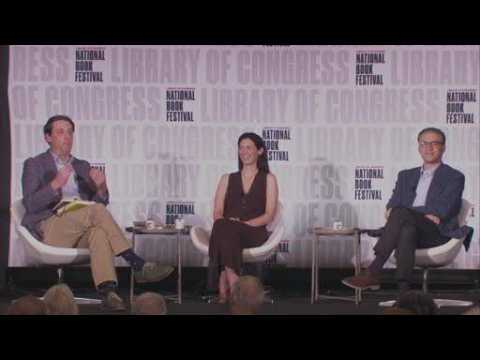
At a book‑festival panel, two authors argued that modern government is slowed and reshaped by procedural safeguards and administrative burdens — from invasive benefit forms to diffused decision‑making on federally funded projects — and called for reforms that simplify rules while preserving accountability.
Mark, an author, and Annie, an author, opened their panel by tracing how 20th‑century institutions were equipped to act quickly on major public needs and how later legal and procedural reforms shifted attention from outcomes to process. Mark described the Tennessee Valley Authority as an example of decisive government action, saying, "They dammed rivers in, like, no time at all, and they built wires." Annie framed her book as an account of 'administrative burdens' — the time, effort and emotional cost that forms and rules impose on individuals.
Annie offered concrete examples of burdensome paperwork: "It is more than 40 pages. It is 18,000 words. It has more than 1,000 questions on it," she said of a DHS‑1171 aid‑program form. She added one intrusive question verbatim: "If you are a single person who is pregnant, what's the date and the place of the conception of your child?" The panelists said procedural complexity can have distributive effects: overly burdensome forms and patchwork administration often fall hardest on low‑income people and people of color.
AI generated
The text on this page is AI generated. Summaries, highlights, analysis, and video transcripts are all produced from the original source material.
AI can make mistakes, so if you spot one, and we will fix it for everyone.
Note: the source content is unaltered by us. Any content source we link to, be it a video, an audio recording, or a document, is presented exactly as its publisher released it. That publisher is usually a government body, sometimes an individual official or another organisation.