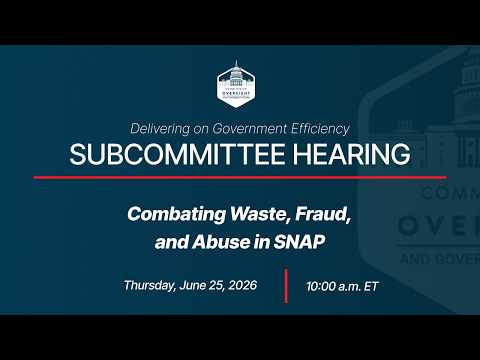
Witnesses split on framing: fraud enforcement vs. protecting SNAP access
Summary
Advocates and investigators agreed SNAP fraud exists but disagreed on diagnosing errors versus fraud and on whether stricter rules will harm access; witnesses urged different mixes of enforcement, technology and administrative support.
Witnesses at the subcommittee agreed that fraud and organized theft threaten program integrity but diverged on how to respond without harming eligible families. Don Royal, representing investigators, pressed for stronger enforcement, more investigator resources and retaining more recovered funds for fraud prevention.
Gina Plata of the Food Research & Action Center warned against equating payment errors with intentional fraud and said "program integrity and food access are not competing goals." She urged modernizing payment systems (including chip-enabled EBT), restoring administrative staff and measuring access and timeliness alongside accuracy to avoid policies that make benefits harder to obtain.
Rachel Gresler urged transparency and said that requiring states to share in costs for high improper-payment rates (as in HR 1 SNAP provisions) and consistent measurement would create stronger incentives for accuracy. Panel members pressed for solutions such as national clearinghouses, ID verification and pilots of technological approaches, with several lawmakers citing the TABS Act as a model.
AI generated
The text on this page is AI generated. Summaries, highlights, analysis, and video transcripts are all produced from the original source material.
AI can make mistakes, so if you spot one, and we will fix it for everyone.
Note: the source content is unaltered by us. Any content source we link to, be it a video, an audio recording, or a document, is presented exactly as its publisher released it. That publisher is usually a government body, sometimes an individual official or another organisation.