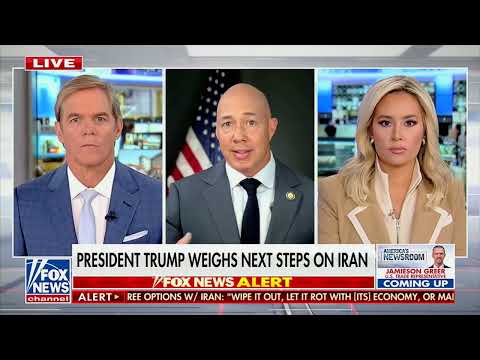
Rep. Brian Mast frames U.S. approach to Iran, addresses pullback on strikes aimed at Houthis
Summary
In an interview, Rep. Brian Mast said U.S. policy seeks regional stability and deterrence against Iran, defended the president's communications with partners, and characterized the IRGC as an ideological force; he also made specific but unverified claims about past U.S. military effects and recent shipping figures.
Rep. Brian Mast said the United States is working to deter Iran and preserve regional stability after the president signaled he was prepared to strike Houthi targets in Yemen but then pulled back.
"The IRGC, they will probably fight until they have nothing left but stones to throw," Mast said, arguing that the Iranian regime is ideological and that the Iranian people must decide their future. He said part of U.S. strategy involves ensuring regional agreements among states such as "Saudi Arabia, Pakistan, and Turkey" provide for mutual defense and that the president is "in communication with all sides."
Mast also presented several numerical claims about U.S. military effects and logistics during the interview. As stated in the transcript, he said "President Trump very literally destroyed their nuclear stockpile, their navy, their air force," and asserted recent U.S. maritime movement and oil shipments through the Strait of Hormuz (the transcript quotes "2,000 ships" and "1000000000 barrels of oil"). Those figures are presented as Mast's assertions in the interview and are not verified in this article.
Why it matters: Mast framed the administration's posture as aiming both to deter Iran and to maintain global energy routes. His remarks reflect one lawmaker's view of the strategic picture and include technical and numerical claims that would require independent verification.
Mast's comments followed an audio clip of Sen. Peter Welch saying, "I do think the war has to end," which the host played while asking the guest whether the U.S. posture was sustainable. Mast said he agrees that the Iranian regime is ideological but emphasized continued U.S. military and diplomatic pressure.
The interview did not produce a formal policy announcement or a recorded vote; Mast presented his assessment and policy preferences during the segment.
AI generated
The text on this page is AI generated. Summaries, highlights, analysis, and video transcripts are all produced from the original source material.
AI can make mistakes, so if you spot one, and we will fix it for everyone.
Note: the source content is unaltered by us. Any content source we link to, be it a video, an audio recording, or a document, is presented exactly as its publisher released it. That publisher is usually a government body, sometimes an individual official or another organisation.