DPS official warns PSOB reimbursements will need ongoing funding after one-time appropriation
Summary
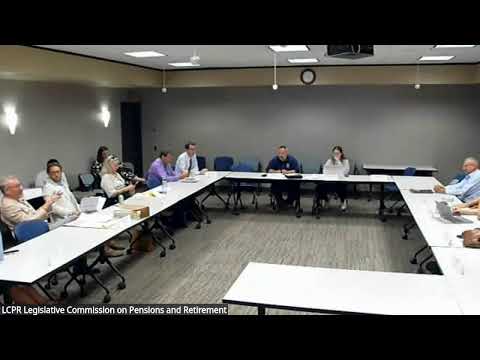
Sean Kramer, chief financial officer at the Department of Public Safety, briefed the group on Minnesota's PSOB reimbursements: FY26 reimbursements reached roughly $25 million (about $20M for continued health insurance and $5.5M for treatment/payroll), the program used a one-time $100M appropriation to expand benefits, and DPS said it will likely request additional ongoing funding to maintain reimbursements beyond FY27.
Sean Kramer, chief financial officer at the Department of Public Safety, gave a budget-focused presentation on the Public Safety Officer Benefit reimbursement program and the treatment services enacted under recent statute changes. He said the $100 million one-time appropriation allowed the state to reimburse employers for a broader set of costs, and that FY26 reimbursements were roughly $25 million in total: about $19.7M for continued health-care premiums and about $5.5M for treatment and payroll reimbursement. "We will be required to request additional funding to cover this program in '28 and beyond based on the current statute, the current burn rate," Kramer said.
Kramer noted that FY26 reimbursements reached 141 employers (cities, counties and state entities), that the program reimburses employer health-premium shares and treatment-related salary/fringe costs for employees on approved duty-disability leave, and that DPS has approximately $42M remaining in available funds for the next fiscal year but expects continued growth. Committee members asked for more granular data (single vs family coverage, age distributions, number still receiving coverage to age 65) and Kramer said DPS would provide additional data where available to inform the legislature's budget decisions.
AI generated
The text on this page is AI generated. Summaries, highlights, analysis, and video transcripts are all produced from the original source material.
AI can make mistakes, so if you spot one, and we will fix it for everyone.
Note: the source content is unaltered by us. Any content source we link to, be it a video, an audio recording, or a document, is presented exactly as its publisher released it. That publisher is usually a government body, sometimes an individual official or another organisation.