Get Full Government Meeting Transcripts, Videos, & Alerts Forever!
Get email alerts on the Transportation Regulation topic
No spam. Unsubscribe anytime.
Council discusses regulation of car rentals and low‑speed vehicles; legal authority limited at town level
Summary
Council members, rental business owners and staff reviewed ambiguities in zoning, grandfathered rental businesses and a 2024 state law on low‑speed vehicles; the council agreed to seek legal clarification and to convene rental operators to explore voluntary measures.
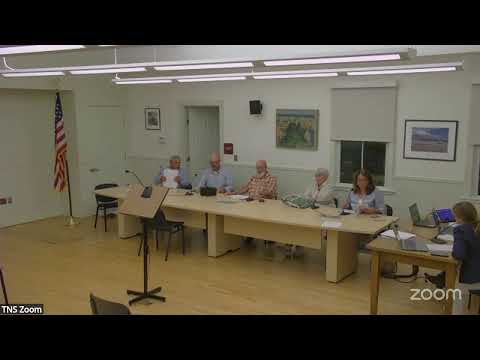
The New Shoreham Town Council held an extended discussion about short‑term car‑rental businesses, the number of vehicles stored on properties, and regulation of low‑speed vehicles (LSVs) following questions about enforcement and optics.
Bill (councilmember) raised complaints that some rental operators appear to exceed historic limits, asking whether licensing or zoning enforcement could limit the number of vehicles stored or rented from a parcel. Town counsel and staff explained the legal context: rental car uses on the island are preexisting nonconforming (grandfathered) uses under local zoning. County/town staff (James, zoning official) and town counsel (Nick) said the municipality’s enforcement path is through zoning notices of violation, appeals to the zoning board and, ultimately, superior court; creating a new town licensing regime for cars would likely require statutory change or open the door to new operators.
John Leone, a rental operator, described his current operating numbers: “one of the locations is 20 and the other is 10,” and later said he typically rents 12 vehicles out of those locations. Council members and staff discussed whether the numerical limit in preexisting decisions refers to vehicles physically on the lot or vehicles rented at a given time. Town staff recommended asking Karen (zoning subject matter expert) for a written interpretation of how the historic approvals limit vehicles on site and whether a property owner can relocate a grandfathered use to a different parcel.
The council also considered low‑speed vehicles (LSVs), including mopeds and other lightweight rental vehicles. Town counsel summarized a June 2024 Rhode Island law that clarifies municipal options: municipalities may prohibit LSVs on certain roads, but state licensing governs many vehicle types and time‑of‑use restrictions may require legislative authority. Nick said municipalities can ban LSVs from specified non‑state roads but cannot broadly preempt state licensing without a statutory change. Rental operators said they already impose private rules, for example not renting certain vehicles after dark and setting minimum renter ages.
Councilmembers agreed to request a written interpretation from zoning staff and Karen, to schedule a meeting with the existing rental operators to explore voluntary approaches (common return times, on‑site numbering/parking), and to consider whether a coordinated legislative proposal to the General Assembly is warranted if the town seeks broader licensing authority.
Ending: The council did not adopt new regulations at the meeting. It directed staff to get legal and zoning clarifications and to convene rental operators for a non‑adversarial discussion of voluntary standards; the council also said it may pursue legislative change if local enforcement options remain insufficient.