Get AI Briefings, Transcripts & Alerts on Local & National Government Meetings — Forever.
Lake County board bars use of county lots, garages for federal immigration enforcement
Loading...
Summary
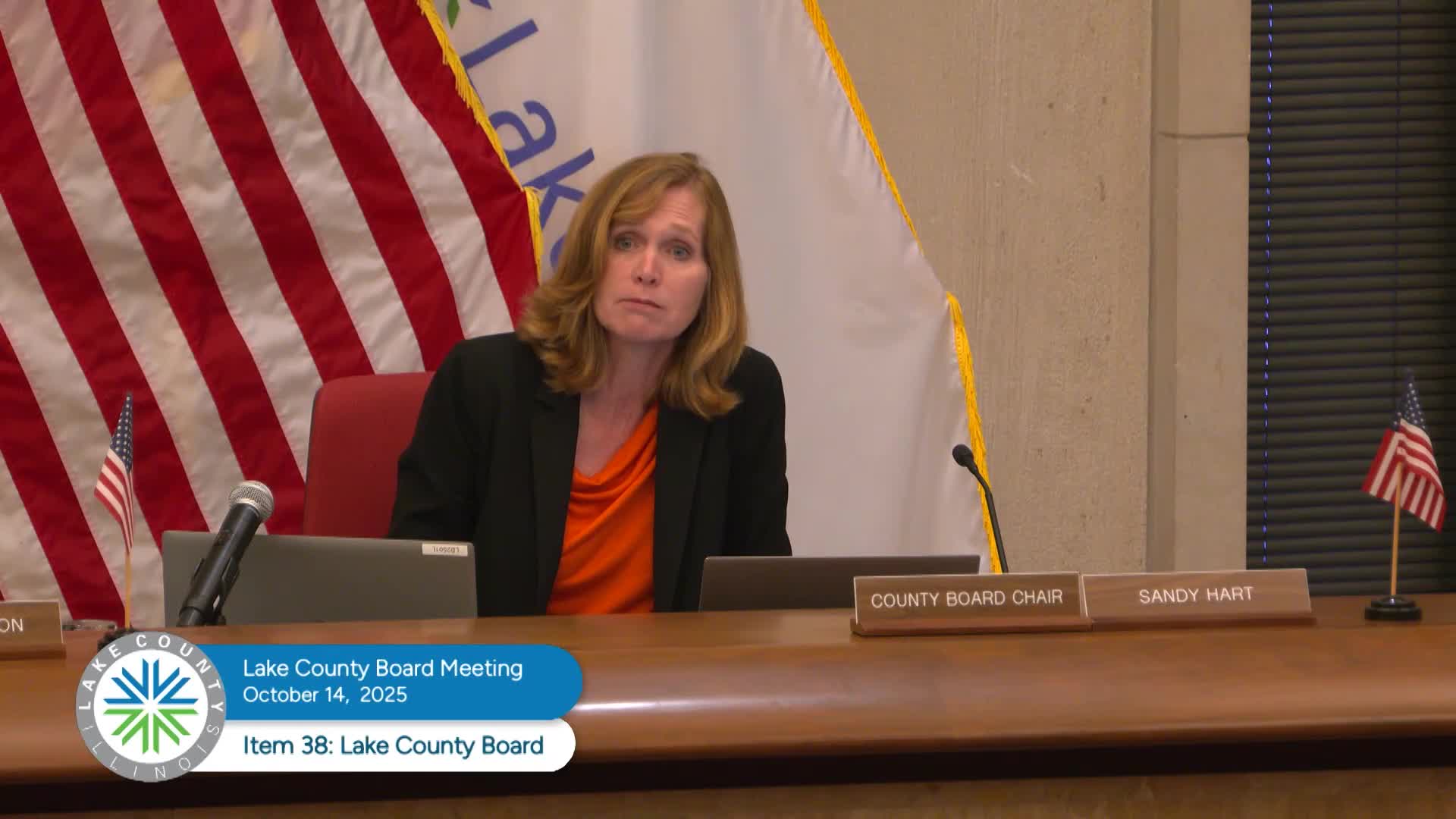
After heated debate and an unsuccessful amendment, the Lake County Board on Oct. 14 approved a resolution prohibiting the use of county-owned parking lots, vacant lots and garages as staging areas, processing locations or operations bases for civil immigration enforcement.
The Lake County Board on Oct. 14 adopted a resolution prohibiting the use of county-owned parking lots, vacant lots and garages as staging areas, processing locations or operations bases for civil immigration enforcement.
Supporters of the resolution said it responds to recent Immigration and Customs Enforcement (ICE) actions around the county that residents and elected officials described as frightening and disruptive. Member Campos, who moved the resolution, said the measure is needed to protect residents and to make clear the county will not provide its property for those operations. "This resolution is badly needed," Campos said during debate.
The vote followed nearly three hours of public comment and board debate that included arguments about the scope of federal authority, the board's duty to protect residents, and the legal limits on local governments. State's Attorney Eric Reinhardt provided legal context during the meeting, citing United States v. Prince and advising that the County's statutory authorities and existing policies shaped what the county can and cannot do regarding use of its property by federal actors.
Why it matters: Supporters said the resolution addresses an immediate community concern after videos and witness accounts showed ICE agents making arrests near county locations. Opponents said the resolution risks confusing federal authority with local policy and questioned parts of the draft that direct county employees to report suspected uses of county property to supervisors. The board debated a narrower amendment proposed by Member Maine that would have replaced the resolution's specific prohibitions with a simpler statement that county resources, property and personnel be used for county purposes only; that amendment failed on a 6-13 vote. The final resolution passed on a roll-call vote, 14–5.
The resolution requires county staff to develop implementing procedures and signage and called for supervisors to be notified when a suspected use of county property for civil immigration enforcement is observed. Supporters described the step as a way to reassure residents; critics said operational details should be vetted through committee. The board voted down a motion to send the item back to the Finance & Administrative Committee before taking the final vote.
Key debate moments - Member Esaiya Campos (mover): “This resolution is badly needed … they can't use our county resources to terrorize our people.” - Member Frank (supporting): “What we're seeing right now is not about law enforcement. That's a lie. This is about instilling fear and control.” - Member Main / Maine (proposed amendment): urged a narrower wording to avoid directing employees by resolution; she said she supported the goal but objected to language that mandates employee reporting. - Member Danforth (opposed to the resolution as written): said the federal government has authority to enforce immigration laws and warned against hyperbolic rhetoric about federal actions. - State's Attorney Eric Reinhardt (legal counsel): explained the office's review, citing legal precedent and the Commandeering Clause and telling the board that department heads already have direction under county rules on permissible uses of county property.
Discussion vs. decision: The record shows the board's discussion included community testimony and considerable disagreement among board members over framing and legal exposure. The outcome, however, was a formal vote to adopt the resolution; the board did not split the resolution into operational steps or delay action pending additional committee review.
Implementation and next steps: The resolution directs county administration to draft implementing procedures, create signage for selected county lots and garages, and sets an internal reporting pathway for suspected uses. The state's attorney's office indicated it had reviewed the language. Neither the resolution nor the meeting record binds other local governments or private landlords; it applies only to property owned or controlled by Lake County.
Ending note: The vote was the board's most significant action addressing ICE operations in recent weeks; several public commenters and board members tied the resolution to witnessed arrests in Waukegan and other parts of the county earlier in October, and the discussion showed a split between members emphasizing local protections for residents and members emphasizing the federal government's enforcement prerogative.