Lifetime Citizen Portal Access — AI Briefings, Alerts & Unlimited Follows
Crookneck Lake board wins continued water clarity, approves 2026 plan and $40 levy
Loading...
Summary
Crookneck Lake Improvement District reported steady water clarity, no zebra mussels found, a shift to flumioxazin herbicide for curlyleaf pondweed control, and approved a performance plan, budget and $40 levy for 2026.
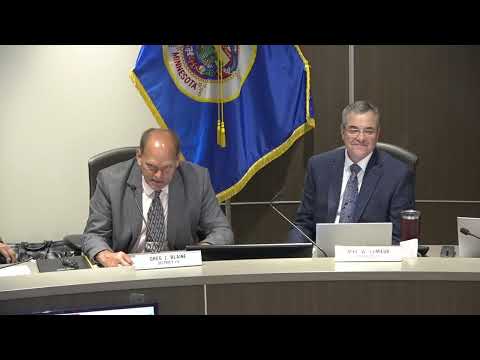
The Crookneck Lake Improvement District reported improved or stable water clarity this year, no evidence of zebra mussels, and a change in herbicide for invasive plant control, and the Morrison County Board approved the district’s performance plan, budget and a $40 levy. Dan Sanger, Crookneck Lake Improvement District chairman, told commissioners that Secchi disk readings returned to 11 feet this year after seasonal drops in prior summers and that the district’s multiple surveys and settling plates found no zebra mussels. He said the state Department of Natural Resources (DNR) granted an overlay permitting approach that lets the district pre-authorize treatment zones and streamline spring surveys and treatments when water temperature reaches about 60 degrees. Sanger said the district switched its primary herbicide to flumioxazin (referred to in the presentation as “Flumio”), a contact herbicide similar to diquat but more expensive (about $612 per acre versus $116 per acre for diquat) and with different sinking/migration properties; he said early results were positive. The district plans to treat about 10.1 acres next year (about 12 acres including new zones) and will apply for permits and AIS grants as needed. Sanger and commissioners discussed recreational impacts: he reported jet-skis stirred water clarity from 12 feet on Thursday to as low as 3 feet after holiday activity, and that high-performance personal watercraft recommendations (300 feet from shore in lakes at least 18 feet deep) effectively exclude most of Crookneck Lake because the lake is shallow in most areas. The board voted to approve the district’s performance plan, budget and levy after a motion by Commissioner Casper and a second; the district indicated it will draw on reserves if a bad weed year forces higher spending. Why it matters: The plan governs invasive-species survey and treatment, annual water quality monitoring, and a levy that funds multi-year invasive-species management; herbicide choice and permit timing affect treatment efficacy, cost and potential environmental effects. What the board decided: The county approved the district’s performance plan, its proposed budget projection and a $40 levy (district-requested rate stabilized after prior-year fluctuations and grant support). The district said it aims to hold the levy at $40 per parcel and use reserves for unexpected high-cost years; it also noted successful eradication of Eurasian watermilfoil in earlier years. No county ordinance change or regulatory action was taken at this meeting; commissioners directed approval of the district plan and levy as presented.