Get Full Government Meeting Transcripts, Videos, & Alerts Forever!
Get email alerts on the Vaccine Safety topic
No spam. Unsubscribe anytime.
Senate hearing spotlights unpublished Henry Ford birth‑cohort study alleging higher chronic illness rates in vaccinated children
Summary
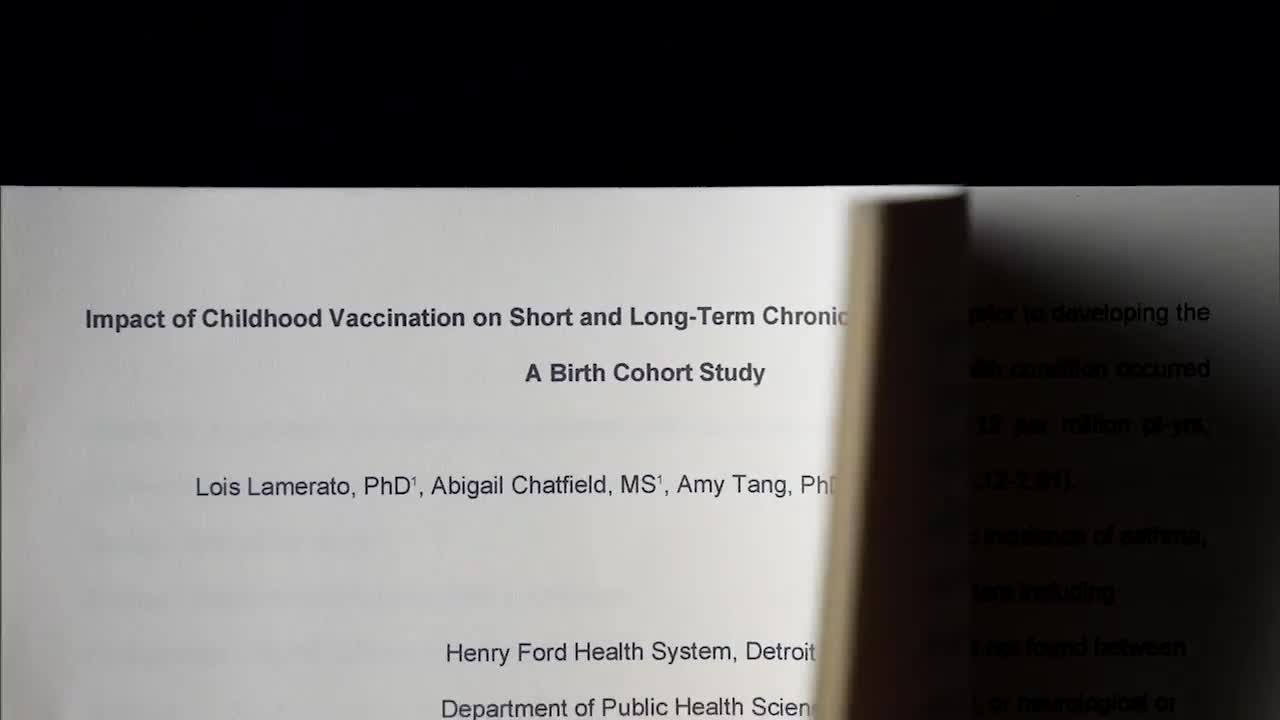
A Senate Permanent Subcommittee on Investigations hearing turned on an unpublished Henry Ford Health System birth‑cohort study that attorney Aaron Siri said shows vaccinated children had higher rates of several chronic illnesses compared with unvaccinated children.
A Senate Permanent Subcommittee on Investigations hearing on research integrity turned to an unpublished Henry Ford Health System study that attorney Aaron Siri presented as a large vaccinated‑versus‑unvaccinated birth‑cohort analysis.
Siri told the committee the Henry Ford study compared children born from 2000 to 2016 and included 18,468 subjects. He said the study "found vaccinated children had 4.29 times the rate of asthma, 3.03 times the rate of atopic disease, 5.96 times the rate of autoimmune disease, and 5.53 times the rate of neurodevelopmental disorders," and that the paper showed vaccinated children had chronic health issues at a rate of about 57 percent versus 17 percent in the unvaccinated cohort.
The study and whether it was suppressed were a focal point for proponents of additional vaccine safety research. Senator Ron Johnson, who convened the hearing, said he had "asked the producers" of a documentary to show a trailer and that the unpublished analysis should be entered into the record. Siri characterized the study as "a large vaccinated versus unvaccinated study using health data from a major United States health institution" and said its results were "troubling." He told the panel the authors declined to publish because they feared professional repercussions.
Stanford infectious‑disease physician Jake Scott, one of three witnesses, disputed both the study’s methods and the interpretation Siri offered. Scott said the unpublished analysis remained hidden from peer review and that the vaccinated cohort had substantially more follow‑up time and medical visits than the unvaccinated cohort, creating detection bias. "When diagnoses require doctor visits, children seeing doctors more often will inevitably have more recorded conditions," he testified. Scott also noted the study reported zero cases of certain common diagnoses in the unvaccinated group, which he called unlikely given national prevalence rates.
Siri and Scott described different sensitivity analyses. Siri said the authors ran checks — excluding children who did not seek care, and restricting cohorts to children continuously enrolled for five years — and reported the elevated risk among vaccinated children remained or increased. Scott said the published record for other large observational studies and randomized trials does not support the magnitude of the Henry Ford findings and that the unpublished manuscript had not been vetted through peer review.
Committee members pressed witnesses on next steps. Senator Richard Blumenthal said hearings should be grounded in peer‑reviewed evidence and expressed concern about elevating a single unpublished analysis. Senator Johnson replied he had forced the study’s disclosure to the committee because "this is information the public should have had in 2020," and said he wanted the authors to publish and submit the paper to peer review.
The hearing did not produce a formal action or committee vote on the manuscript. Witnesses and senators repeatedly called for peer review and replication: Siri said the authors should submit the analysis to a journal; Scott said the study should be published and scrutinized by independent researchers so its design and potential biases can be assessed.
Ending — The exchange left the Henry Ford analysis publicly visible but unresolved: the committee heard conflicting accounts about the study’s methods and whether the findings represent detection bias, residual confounding, or a signal that merits further study. Senators urged the authors to submit the work to peer review and for independent groups to attempt replication.