Lifetime Citizen Portal Access — AI Briefings, Alerts & Unlimited Follows
Olympia School Board hears budget update as legislature, enrollment and special-ed funding leave district outlook uncertain
Loading...
Summary
District leaders updated the board on 2025–26 budget assumptions, enrollment and staffing, and preliminary results from a district budget survey, saying legislative outcomes will determine whether the district must cut positions or shift reserves.
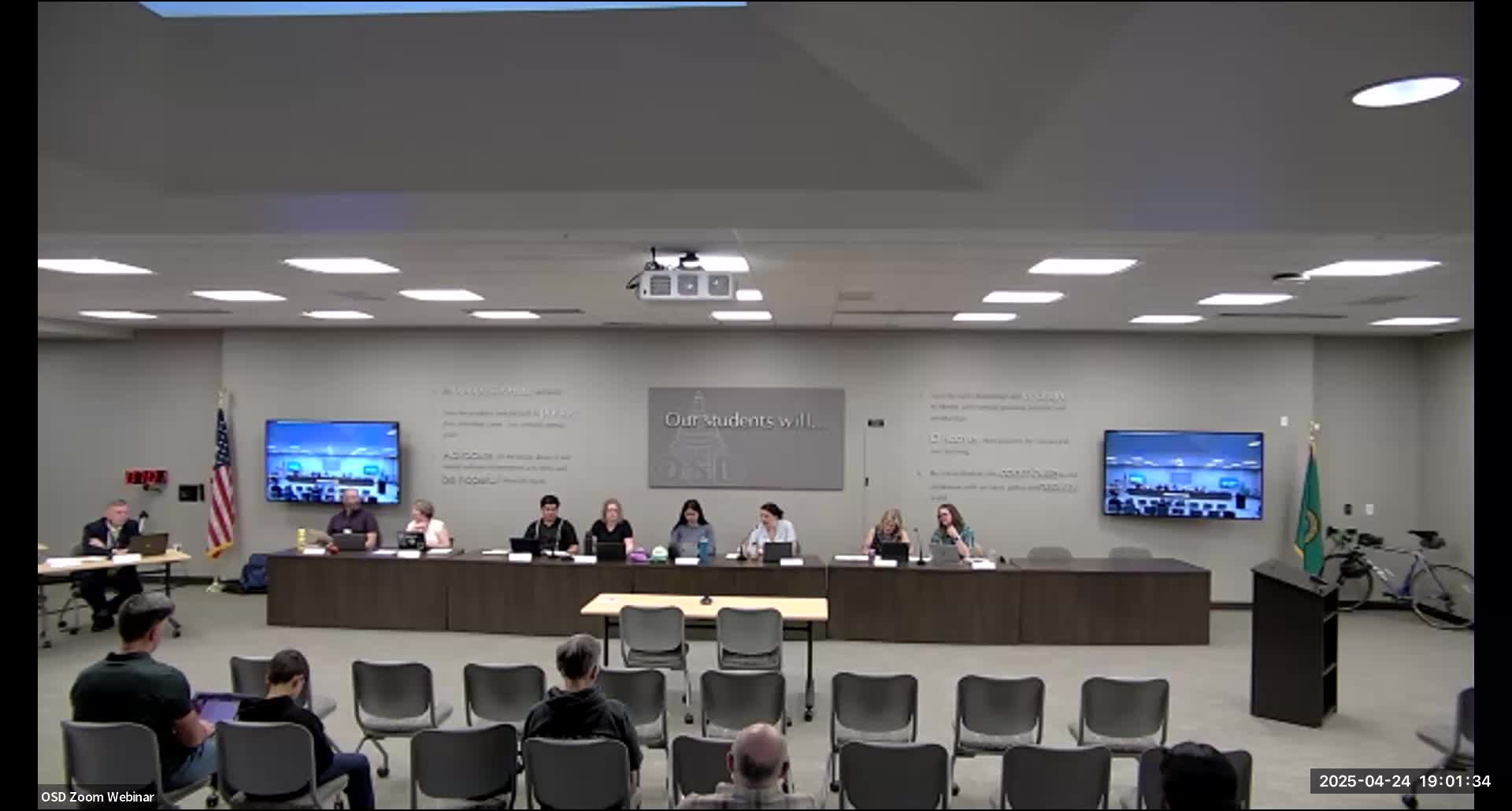
Executive Director Davis told the Olympia School District Board on April 24 that preparing the 2025–26 budget is difficult while the state Legislature’s final decisions remain pending. “It’s hard to do a budget update when we don’t know what’s happening with the legislature,” Davis said, summarizing a presentation that reviewed enrollment, staffing requests, projected revenues and risks.
The board heard that October 2024 enrollment was 9,022 — above the district estimate of 8,886 — and that the district is projecting an annual average of about 8,973 students for the current year. Davis said out‑of‑district transfer requests have risen and the district had a net gain of roughly 250 students this year, concentrated at the secondary level.
Why it matters: the district’s operating model ties staffing to enrollment and state funding. Small shifts in state allocations, combined with step increases and benefit cost changes, can quickly erode the district’s fund balance and force difficult personnel decisions.
Davis walked the board through several revenue and cost items driving the projection. A 2.5 percent inflationary adjustment to compensation included in both House and Senate budgets is expected to bring about $1.8 million in new state funding but, because the district now employs more people, the estimated additional cost to the district is closer to $2.9 million. Health and benefit (SEB) rate increases in the two chambers diverge; Davis estimated SEB costs of $1.8 million to $2.0 million depending on the final rate.
Special education funding that began the session at larger proposals has narrowed; the latest multiplier discussed in the Legislature was 1.16, which Davis estimated would deliver about $1.3 million in new funding for the district. By contrast, a multiplier nearer 1.5 — which had appeared in earlier proposals — would have covered a much larger share of the roughly $6.5 million the district currently draws from local levy dollars to support special education services.
Davis also described two items with material cash‑flow implications: an apportionment timing shift and levy options. An apportionment shift under discussion in Olympia would temporarily reduce state payments in February, March and April and move funds into August; Davis said a 2.5 percent reduction across those three months would represent about $3.125 million of revenue that would be shifted to a later month and could require an interfund loan to maintain payroll. The board noted that such a move helps the state cash flow but strains districts’ month‑to‑month liquidity.
On levies, Davis said a proposal to raise the per‑pupil enrichment levy limit by $500 in year one and then index it would, if enacted, yield roughly $2.5 million the first year and about $5 million annually thereafter. The district has an approved higher levy limit in place, Davis noted, so it would not require a new voter approval to collect the increased amount if the Legislature authorizes it.
Staffing and school‑level details: spring staffing meetings produced several targeted requests. Districtwide, elementary classroom configurations showed 26 students across all elementaries in overload spread over 18 classrooms and 15 split classes, with most pressure at Madison and Boston Harbor. Several small FTE requests were identified: L.P. Brown requested 0.1 FTE to add a K–3 classroom; Washington Middle requested 0.1 FTE to accommodate geometry demand; Garfield requested a 0.4 FTE combined with title funds to form another classroom.
The Freedom Farm program (moving to ORLA from OHS) is projected to grow from about 45 to 75 students and would generate roughly 3.5 FTE under the formula; the district has been subsidizing the farm with 0.6 FTE since a grant ended. Davis said hiring additional staff for growth would occur only if enrollment materializes in a later semester.
Survey and community feedback: Davis and Superintendent Murphy also presented preliminary results from a district budget survey completed by 1,255 respondents. Teaching and instruction, focused academic supports and the arts were the highest‑ranked spending priorities overall. Responses varied by role: staff ranked paraprofessional support higher than students did; students rated athletics and activities relatively higher than adults. Open‑ended responses raised two consistent themes: (1) concern about adding extra duties for already busy staff at smaller schools without clear compensation or boundaries; and (2) calls for greater transparency about district budget choices and clearer descriptions of proposed role expansions.
Public comment at the meeting echoed those concerns. Public commenter Dune Ives asked, “Where does an expenditure of increase of $13,000,000 come from without any enrollment growth?” and urged the board to reconsider large fund balances in favor of services for students. Melissa Walker, a teacher librarian at McLean Elementary, said her school is losing library and counseling FTE and urged the board to take a “more nuanced look at the supports” allocated by staffing formulas.
Board reaction and next steps: directors pressed for clarity on how construction and local development would affect fall enrollment and whether the district’s longer‑range facility planning would change staffing assumptions. Davis said the district will continue first‑day and early‑fall enrollment monitoring and make adjustments as needed. Board members emphasized they prefer cuts to central office spending before classroom staff but acknowledged the uncertainty and the personal impact of naming positions for reduction. Davis said the district is delaying any staffing‑reduction exercise until legislative action is final.
Votes at a glance: the meeting recorded several routine board approvals. The board unanimously approved the evening agenda, unanimously adopted the April 10, 2025 minutes, unanimously approved the consent agenda and unanimously adopted a proclamation declaring Teacher Appreciation Week in May 2025. (See formal actions list below.)
The board will reconvene budget deliberations once the Legislature’s final actions are clear; Davis said the district expects more certainty after the weekend and will update the board on Monday if new state budget language is released.