Get AI Briefings, Transcripts & Alerts on Local & National Government Meetings — Forever.
Panel advances bill aimed at ensuring pharmacy stock of buprenorphine amid disputed supply causes
Loading...
Summary
House Bill 505 would require retail pharmacies to maintain a minimal stock of buprenorphine and create reporting for wholesale distributors; the committee advanced the bill 6–2 after extended testimony from treatment providers, advocates and pharmacists who opposed the proposed compliance method.
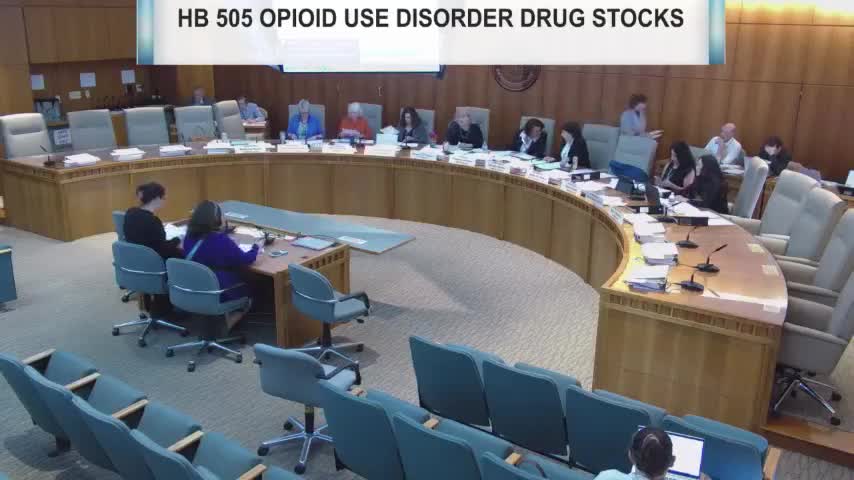
House Bill 505, a measure intended to reduce interruptions in treatment for people with opioid‑use disorder by requiring retail pharmacies to maintain a baseline buprenorphine stock and creating distributor reporting, was advanced by the committee with a do‑pass recommendation.
The sponsor said the bill responds to interruptions in buprenorphine access that can cause withdrawal, increased risk of illicit opioid use and overdose. The bill would require retail pharmacies that distribute controlled substances to maintain a daily average supply plus three extra two‑week prescriptions (at 24 milligrams per day, as drafted) and would require pharmacies to request increased thresholds from wholesalers; wholesale distributors would be required to report monthly to the Board of Pharmacy on supply. Pharmacists would have three days to order replacement stock after a shortfall; pharmacies that document timely orders would not be penalized.
Testimony divided along practitioner and distribution lines. Treatment‑provider witnesses and clinicians described repeated instances where patients were unable to fill buprenorphine prescriptions locally, sometimes forcing clinics to deliver medication or patients to travel dozens of miles. Advocates said national research shows 40–50% of U.S. pharmacies lacked buprenorphine stock in some recent studies.
Pharmacists and pharmacy‑owner representatives opposed the bill’s methodology, saying the problem is primarily at the distribution level and that pharmacies cannot compel wholesalers to ship product; they warned the bill would impose administrative burdens on already understaffed pharmacies and could impose costs on small rural owners. Wholesale distribution representatives urged collaboration and said thresholds and suspicious‑order monitoring are governed by federal regulations and settlement terms.
After discussion and sponsor commitments to continue technical work with pharmacies and distributors and to refine language (including reducing initial stocking requests from a full month’s supply to three two‑week prescriptions above average), Representative Ferrari moved a do‑pass recommendation and Representative Kates seconded. The committee recorded a 6–2 do‑pass on the bill. Sponsors said they will work in interim to refine language and consider exemptions or scaled requirements for small rural pharmacies.
Why it matters: supporters said uninterrupted buprenorphine access prevents withdrawal and reduces overdose risk; opponents said the bill as drafted shifts burdens to pharmacists while the distribution chain and federal monitoring rules are the practical bottleneck.