Get AI Briefings, Transcripts & Alerts on Local & National Government Meetings — Forever.
State economic development secretary urges investment in site readiness, quantum and workforce programs
Summary
Cabinet Secretary Black told the House Commerce & Economic Development Committee the department seeks funding for site readiness, utility pre-deployment, and quantum-related tax incentives while highlighting gains from LITA and JTIP and growth in film, outdoor recreation and healthy food programs.
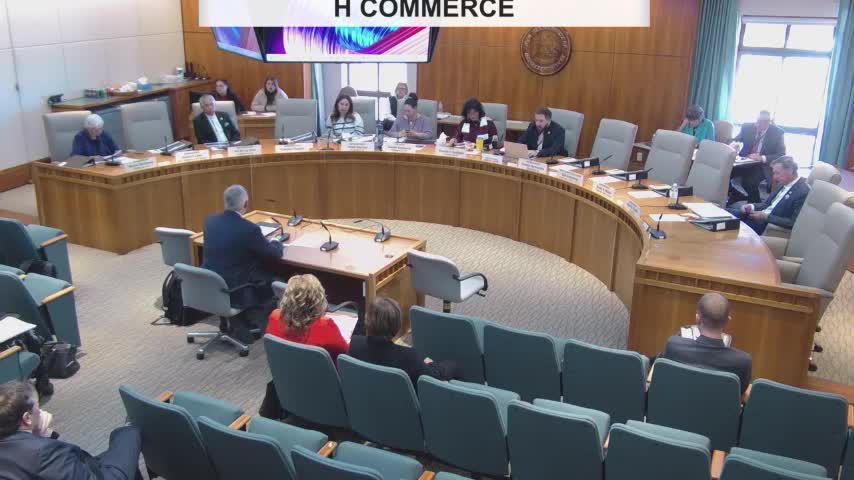
Cabinet Secretary Black, head of the state Economic Development Department, told the House Commerce & Economic Development Committee that the department will press for new and expanded programs this session, including a site-readiness fund, utility pre-deployment authority and incentives for quantum-related investment.
Black said economic development “is not just about the bottom line. It's about how we nurture and protect our institutions and our democracy.” He framed the department’s budget and policy requests as tools to increase shared opportunity and keep workers and employers in New Mexico.
The nut graf: Black asked lawmakers to prioritize funds that speed time-to-market for large projects and expand technical assistance for local jurisdictions. He said the department will seek an executive request for site readiness, a regulatory change to allow expedited utility deployment to certified sites, and two quantum-related bills aimed at drawing private investment and federal designations.
Black described the department’s portfolio, including the Local Economic Development Act (LITA) closing fund, the Job Training Incentive Program (JTIP), the Healthy Food Financing Fund, New Mexico MainStreet, the film office and newly created divisions for creative industries and outdoor recreation. He cited a Los Lunas case study showing substantial gross receipts tax growth after a major job-producing facility located there and said that, by some measures, a $10 million LITA investment produced roughly a quarter‑billion dollars in GRT over a decade.
On specific proposals, Black said the site-readiness bill would allow the department to act as a technical advisor to local economic development organizations and to fund site characterization (water, wastewater, electricity, rail, broadband, environmental reviews, housing studies). The executive requested $24 million; Black said LFC staff recommended $35 million in a draft. He said certified strategic economic development sites would be listed in a public portal to help developers and site selectors find ready properties.
On utilities, Black described a utility pre-deployment bill that would allow investor-owned utilities and co-ops to pre-deploy infrastructure to certified sites and place that investment in a regulatory asset so it can later be recovered in rates if the site comes into service. The bill draft would include language to let co-ops access the NMFA public project revolving fund for low‑interest loans to make pre-deployment feasible.
Black outlined two governor‑proposed quantum bills the office is supporting: a 30% capital equipment (CapEx) refund (cap $75 million initially with an additional $75 million conditional on winning a National Science Foundation regional engine designation) aimed at quantum‑related businesses, and a $60 million gross receipts tax waiver over four years for Sandia and Los Alamos National Laboratories tied to a quantum benchmarking initiative. He credited university–lab partnerships, especially at UNM and Sandia, for local workforce strength in quantum technologies.
Black also highlighted program results: he said JTIP has awarded 12,000 jobs since 2019 with an average wage rising to about $24 per hour, that film production wages average nearly $37 per hour, and that the Healthy Food Financing Fund leveraged federal grants. He described the Outdoor Recreation Division’s Trails Plus and Outdoor Equity grant programs and the Creative Industries division’s startup supports and training.
Committee members pressed on details. Representative Armstrong asked about average Healthy Food Financing Fund award sizes; Black said he did not have an average amount on hand and offered to follow up. Representative Murphy asked about the ROI calculations and whether economic multipliers are used; Black said the department uses an internal model that considers job counts, wages and industry multipliers and that LITA deals include reporting and clawback provisions.
Members raised process questions about LITA funding availability; Black explained accounting nuances, reporting obligations and that some funds are obligated but not yet drawn down. He said the department will improve how it communicates the status of obligated LITA dollars to appropriators.
Black said the department will publish a quarterly building permit data dashboard in coordination with RLD that shows average permit processing time from application to determination; the intention is transparency to identify where permitting delays and capacity gaps exist. He said the department plans to publish an updated, shorter state economic strategy and has worked with Harvard's Growth Lab on the update.
Ending: Black closed by offering to follow up with members on detailed questions and stood for committee questions. He said department field representatives will recruit candidate sites for the site‑readiness portal and that the department will pilot site characterization work and administration of small grants to reduce barriers to development, including in tribal and rural communities.
"If we can get that to 8 months to 18 months, then we're competitive," Black told the committee when describing site readiness and time-to-market considerations.