Get AI Briefings, Transcripts & Alerts on Local & National Government Meetings — Forever.
Lawmakers, First Lady and survivors urge swift passage of Take It Down Act to curb AI deepfake abuse
Summary
At a Senate roundtable, lawmakers, the first lady and survivors described harms from nonconsensual intimate images and urged House passage of the Take It Down Act, which sponsors say would require platforms to remove such images within 48 hours and make publication a federal crime.
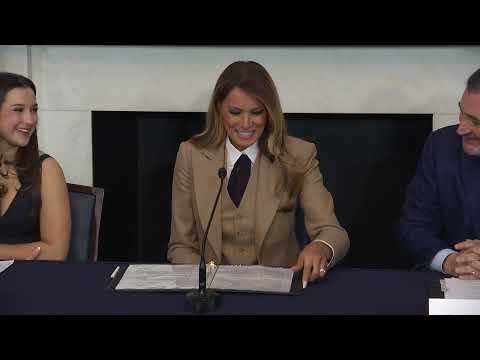
Senator Ted Cruz, host of a Capitol Hill roundtable on the Take It Down Act, opened the event by saying the Senate had already approved the bill unanimously and urged House members to move it quickly so it can reach the president’s desk.
The bill aims to criminalize the publication of nonconsensual intimate images—including AI-generated “deepfake” pornography—and to require major online platforms to implement a notice-and-takedown process that sponsors say would remove such images within 48 hours. "The Take It Down Act, which has already passed the senate unanimously," Cruz said, "is one step closer to making this dream a reality."
Why it matters: Survivors and advocates at the roundtable described repeated, long-lasting harm caused by images that continue to circulate online and by slow or nonresponsive takedown processes. Several speakers urged federal law to create a uniform remedy so victims nationwide—not only those with influence—can get explicit images removed quickly.
Survivors recounted how AI tools were used to fabricate explicit images and how platforms and schools often failed to respond. "I was just 14 years old when a classmate created AI nudes of me from an innocent social media picture," said Lisonbee Berry, who described waking on Oct. 2, 2023, to messages that the images were circulating. She said outreach to Snapchat produced removal only after a senator's office intervened; she added that the images remained online for months before that response. Francesca Mani, also 14 at the time of her incident, said her school’s response was inadequate, that only one student received a one-day suspension, and that school discipline codes took months to update: "This silence sent a dangerous message. To the girls, you are not worth fighting for."
Former South Carolina state representative Brandon Guffey described a far more severe consequence in his family: "07/27/2022, I lost my oldest son, Gavin Guffey, to suicide," he said, adding that his son had been extorted online and that it was about an hour and 40 minutes from the initial contact to his death. Guffey said his state later passed "Gavin’s law," criminalizing digital sextortion and producing a conviction tied to an AI-created image.
Stefan Turkheimer of RAINN (the Rape, Abuse & Incest National Network) summarized hotline data showing a rise in online, image-based abuse and described repeated retraumatization when images resurface: "We do not have good options for those kids. We don't have an ability to get these images taken down, which is why I'm so grateful for a bill like this that will say, in 48 hours this is done."
House leaders and committees represented at the event pledged fast action. House Speaker Mike Johnson, House Majority Leader Steve Scalise and members of the Energy and Commerce Committee said they expect to prioritize the bill in committee and bring it to the floor. Representative Salazar, a lead sponsor in the House, said the bill will force platforms such as Snapchat, Instagram and TikTok to comply within the 48-hour window or face legal consequences.
Points of contention and limits: Speakers emphasized that schools, social platforms and law enforcement currently lack consistent tools or incentives to act. Several advocates urged the Department of Education to issue nationwide guidance on how schools should respond to AI-enabled exploitation. The roundtable did not include a formal vote; sponsors and attendees described prior Senate passage and urged House consideration.
What’s next: Sponsors said the House will take up the Take It Down Act and push to finalize language in committee and on the floor. If enacted as described by sponsors at this event, the law would establish a federal takedown timeline and criminal penalties for perpetrators.
Ending note: Participants credited survivor testimony and bipartisan support for advancing the measure. "Your work will pay off. We're gonna get this done this year," House leaders said at the event, while survivors and advocates urged rapid passage to prevent further harm.