Lifetime Citizen Portal Access — AI Briefings, Alerts & Unlimited Follows
Supervisors consider rural service zoning to formalize village‑scale businesses and reduce nonconformities
Loading...
Summary
Board members discussed creating a rural service district intended to regularize small crossroads businesses (stores, small veterinary services, farm stands) and reduce the need for special‑use permits, while noting limits to avoid full commercialization.
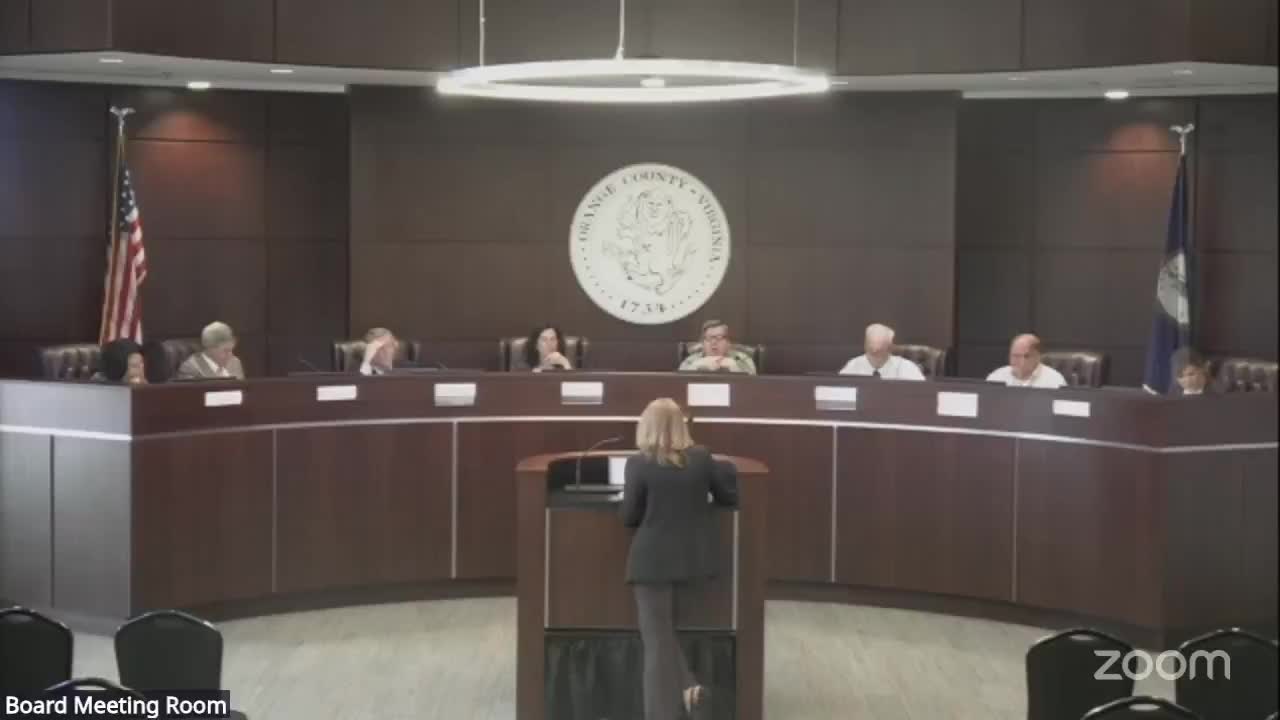
Orange County supervisors debated a proposed rural service zoning classification at a work session, exploring whether the new district could formalize existing village‑scale businesses while preserving rural character.
Several supervisors and planning staff described the rural service concept as a parcel‑level classification that could be applied either at the request of landowners through rezoning or, if the board so chooses, proactively to specific crossroads with clusters of nonconforming businesses. Planning staff explained that adopting a rural service district could convert some long‑standing nonconforming uses — such as an old store at a crossroads — into conforming uses under objective standards, reducing repeated special‑use permit proceedings for routine changes (for example, sign replacements) while keeping intensity limits low.
Board members sought clarity about permitted versus special uses. Multiple supervisors said they did not want the rural service classification to become a catch‑all commercial district. The group discussed options such as limiting the square footage of permitted buildings, reserving larger or higher‑impact uses for special‑use review, and setting design and scale standards to maintain rural character.
Veterinary services received particular attention. One supervisor and other board members emphasized that local veterinarians are hard to recruit and often operate from small sites; they urged caution before imposing constraints that could discourage clinics from locating in the county. Planning staff noted that specific uses could be placed in the permitted or special‑use lists depending on the board’s policy preference.
The board did not adopt the district at the session. Instead, supervisors asked staff and the Berkeley Group consultant to test the permitted‑versus‑special‑use lists, consider size and massing caps, and return with refined draft language that preserves rural character while addressing the county’s operational concerns.
No formal motions or votes were taken.