Get email alerts on the Fleet Management topic
No spam. Unsubscribe anytime.
Fleet department seeks extra technicians and two-shift schedule to reduce breakdowns
Summary
Fleet managers asked the council to add heavy-duty technicians and reorganize to two shifts, citing high unscheduled work and an aging parts/maintenance system that is slowing vehicle turnaround for public-safety and service vehicles.
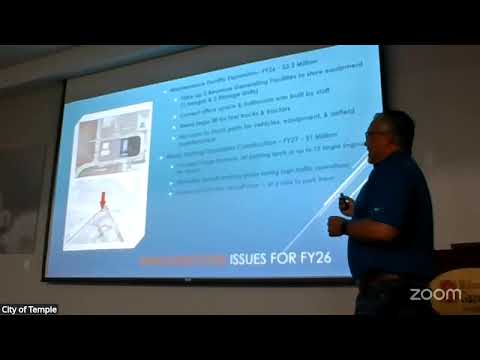
Fleet leadership told the council the city’s fleet — roughly 812 assets including fire and garbage trucks — is carrying heavy unscheduled work and needs additional technicians and updated shop equipment to avoid repeated breakdowns and downtime.
In the March 26 presentation, the fleet manager said heavy-duty assets currently require an industry benchmark of roughly one technician per 15 heavy-duty vehicles. ‘‘If we keep with the 15-to-1 ratio…we would be increasing the number of heavy-duty technicians,’’ the presenter said, arguing that a second shift would allow scheduled maintenance to happen outside peak service hours.
Why it matters: Scheduled preventative maintenance is harder to complete when more than half of heavy-duty shop work is unscheduled breakdowns, fleet staff said. That forces public-safety, solid-waste and street equipment to be pulled from service and reduces city responsiveness.
Specific requests included heavy-duty technicians, a second shift model (day and evening), an asset-acquisition/management position, safer fluid-dispensing equipment and a modern hose crimping capability to reduce external repair costs. Staff also flagged a growing inventory-management workload tied to alternative fuel infrastructure (CNG, propane) and to an imminent increase in heavy equipment as the city grows.
Council discussion focused on hiring feasibility and whether local labor markets can fill the positions. Fleet staff said regional interest in city jobs has improved thanks to recent recruitment and compensation changes.
No formal votes were taken; staff requested council guidance on whether to prioritize the hires in FY26.
AI generated
The text on this page is AI generated. Summaries, highlights, analysis, and video transcripts are all produced from the original source material.
AI can make mistakes, so if you spot one, and we will fix it for everyone.
Note: the source content is unaltered by us. Any content source we link to, be it a video, an audio recording, or a document, is presented exactly as its publisher released it. That publisher is usually a government body, sometimes an individual official or another organisation.