Get Full Government Meeting Transcripts, Videos, & Alerts Forever!
Get email alerts on the Faa Reauthorization Implementation topic
No spam. Unsubscribe anytime.
Senate Commerce Committee presses FAA on implementing 2024 reauthorization law
Summary
Witnesses from the Federal Aviation Administration told the Senate Commerce Committee they have made progress implementing the FAA Reauthorization Act of 2024 but acknowledged missed deadlines, staffing challenges, and remaining modernization work.
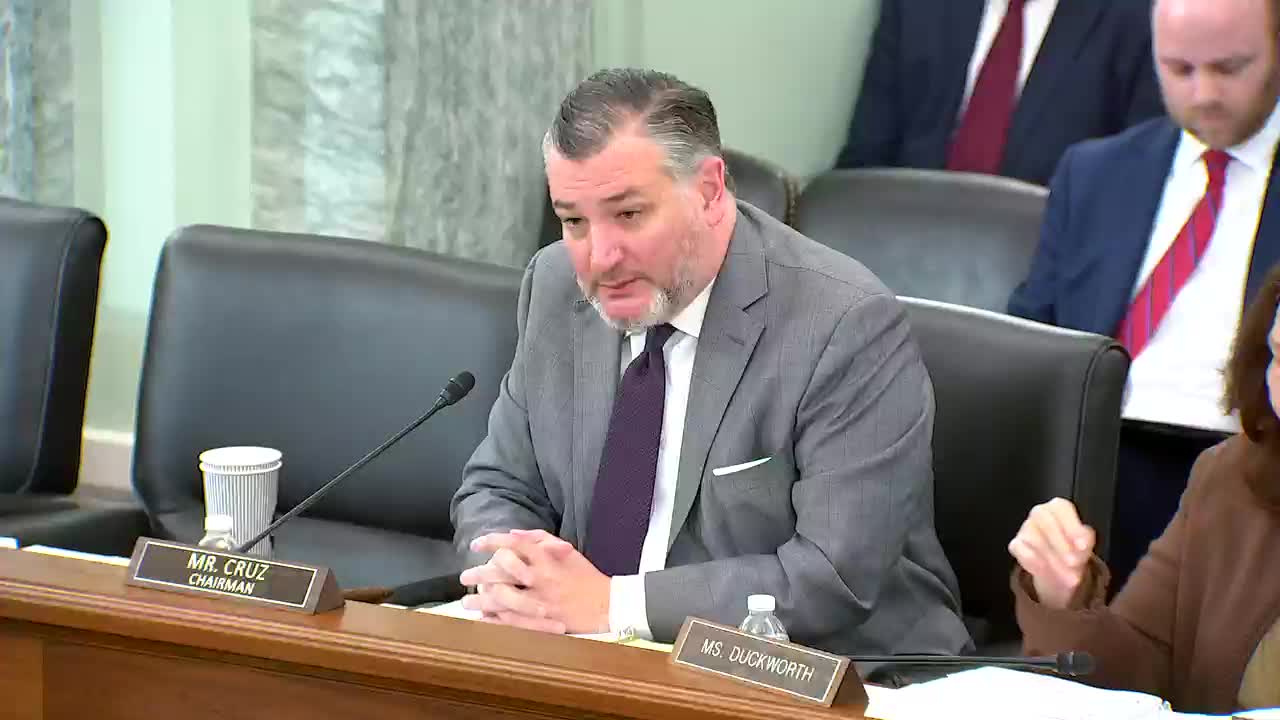
The Senate Commerce, Science and Transportation Committee on an oversight hearing pressed Federal Aviation Administration officials on the agency's implementation of the FAA Reauthorization Act of 2024 and on actions to address recent safety lapses.
Committee Chairman Crews opened the hearing by noting the 2024 law “mandated an audit of all legacy pre‑2000 air traffic control systems to assess operational risk, functionality, security, and compatibility with current and future technologies,” and he said the committee expects the FAA to follow statutory timelines. Ranking Member Cantwell and other senators likewise demanded updates on overdue rule‑making and program rollouts tied to the law.
Franklin McIntosh, deputy chief operating officer for the FAA's Air Traffic Organization, told the committee the FAA has made “significant progress implementing the act's several hundred requirements” over the past year and listed several operational improvements, including shortening processing times for aircraft registration and certificate applications, and enhancements to data analysis via ASIAS (Aviation Safety Information and Analysis System). McIntosh said the FAA is also focused on integrating new aviation technologies including advanced air mobility and powered‑lift aircraft.
Jody Baker, deputy associate administrator for aviation safety, described updates to safety data tools and the agency's plan to apply newer analytic methods to identify trends sooner. "We are already committed to that and this announcement doesn't impact the resources there," Baker said in response to questions about recent resource announcements.
Committee members pressed the FAA about missed statutory deadlines. Crews and others noted the law required the FAA to enable beyond‑visual‑line‑of‑sight (BVLOS) drone operations by a deadline the administration missed; Baker said the BVLOS rule is “in review” and the agency is working to publish it. Senators also asked about the new Center for Advanced Aviation Technologies announced for the Dallas–Fort Worth area; McIntosh confirmed the center, to be run by the Texas A&M University System, was announced and will support technology integration.
The hearing included repeated questions about whether recent agency personnel actions and reductions will affect the FAA's ability to meet reauthorization goals. McIntosh and Baker said many safety‑critical positions were exempted from personnel moves and described ongoing hiring and retention efforts but did not provide final, agency‑wide numbers during the hearing.
Why it matters: The 2024 reauthorization directed dozens of technical, staffing and rule‑writing tasks that the FAA must carry out to modernize the national airspace, improve runway safety and make room for new types of aircraft. Committee members emphasized that implementing the law on schedule is important both for public safety and for industry certainty as new aviation technologies arrive.
The committee gave FAA witnesses until the date specified in committee procedures to supply additional documents and follow up answers to written questions.