Get AI Briefings, Transcripts & Alerts on Local & National Government Meetings — Forever.
Senate panel hears push to expand state aid for localities hit by disabled-veteran property tax exemption
Loading...
Summary
Local officials from Lampasas, Bell and Killeen told the Senate Finance Committee that expanding eligibility for state reimbursement under House Bill 2,894 is needed to offset large local budget impacts from the Disabled Veterans Homestead Exemption; witnesses urged the committee to pair any expansion with adequate funding.
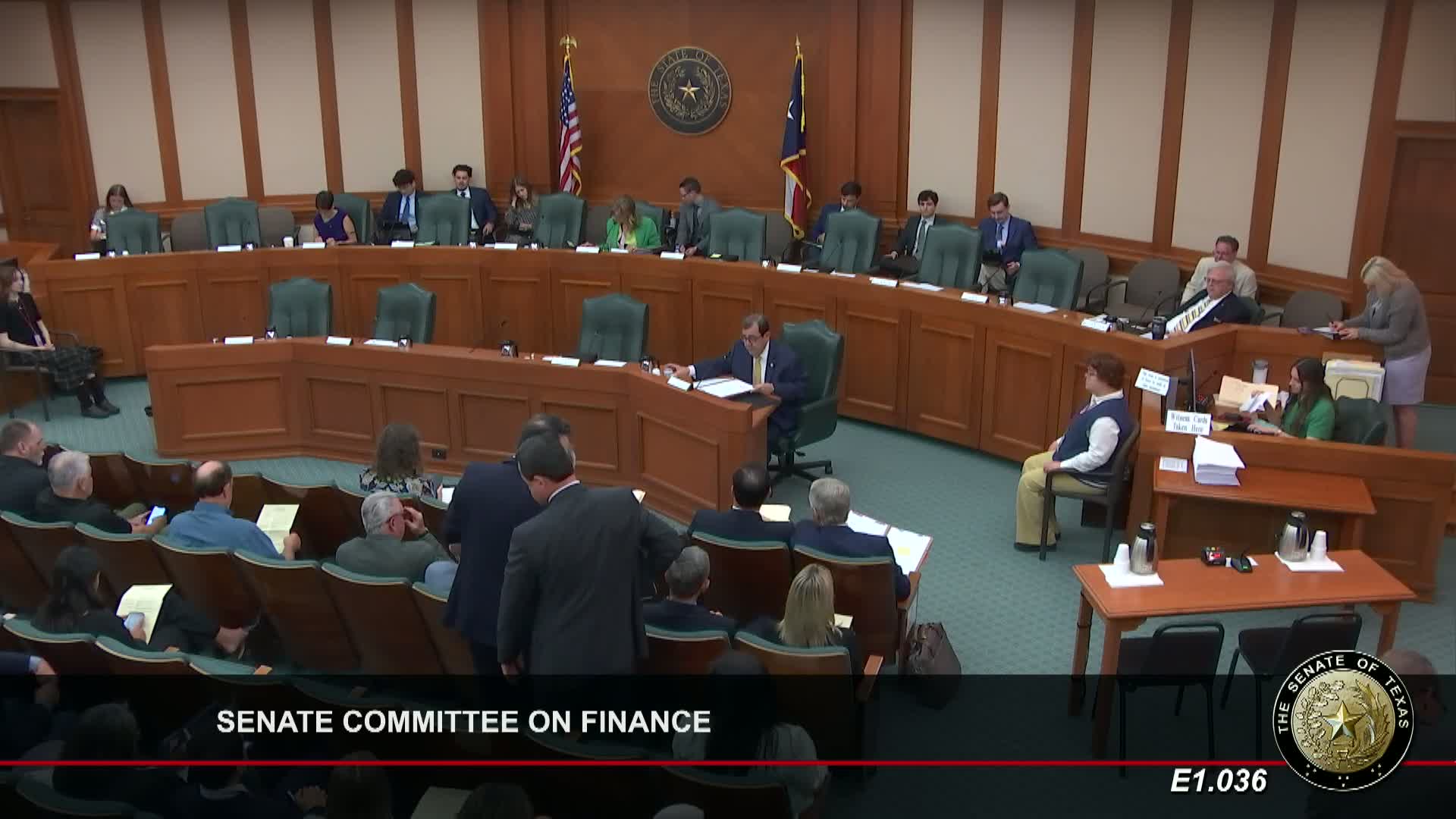
Committee on Finance members heard testimony Tuesday on the committee substitute for House Bill 2,894, a proposal to expand eligibility for state reimbursement to local governments disproportionately affected by the Disabled Veterans Homestead Exemption.
The bill’s sponsor, Senator Sarah Flores, told the committee the measure would add municipalities in Bell, Coryell and Lampasas counties to a list of local governments that may qualify for relief when revenue losses from the exemption equal or exceed 10% of a local government’s general revenue fund. “Committee substitute for House Bill 28 94 seeks to expand the eligibility criteria for state aid of local governments that are disproportionately affected by the Disabled Veterans Homestead Exemption,” Flores said.
The bill matters to local officials who say their tax bases have been materially eroded. “In 2024, Lampasas County lost approximately $1,600,000 in tax revenue. That’s 16% basically of our budget,” said Randall Hoyer, Lampasas County judge, who testified in support. David Blackburn, Bell County judge, said the exemption represented “3¢ of our 32¢ tax rate this past year” — about $11 million — and said Bell County is more disproportionately impacted than any other Texas county.
City and county witnesses described growing, compounding fiscal pressure. Kent Cagle, City of Killeen, said his municipality added $241 million of new taxable value in the past year while the increase in the disabled-veteran exemption was roughly $287 million, creating an almost $16 million hit to Killeen’s general fund. Several witnesses said expansion should be accompanied by additional funding. “Expanding eligibility, without adequate funding will only increase the challenges that cities, counties, and the state will face,” Blackburn told senators.
Some witnesses urged tighter fiscal accounting for reimbursements. Howard Airy, who testified as a resident, asked the committee to require reimbursements to be counted as property tax revenue for voter-approval-rate calculations so local voters see the effect of the reimbursements rather than creating a possible local funding windfall.
Veteran organizations backed the change, noting an expected increase in veterans eligible for disability under the PACT Act. Jim Brennan, legislative director for the Texas Coalition of Veterans Organizations, said the PAC Act will likely increase the number of veterans eligible for disability compensation and that veterans support solutions that address local fiscal impacts.
The committee accepted public testimony on the substitute and later moved the committee substitute out of committee. The committee reported the committee substitute to the full Senate; the roll call recorded 8 ayes and 1 nay.
Additional details in the hearing included the role of the Texas Comptroller in administering pro rata distributions and witnesses’ repeated requests that the Legislature pair any expansion of eligibility with adequate appropriation language or clear funding guidance for the comptroller’s office.