Lifetime Citizen Portal Access — AI Briefings, Alerts & Unlimited Follows
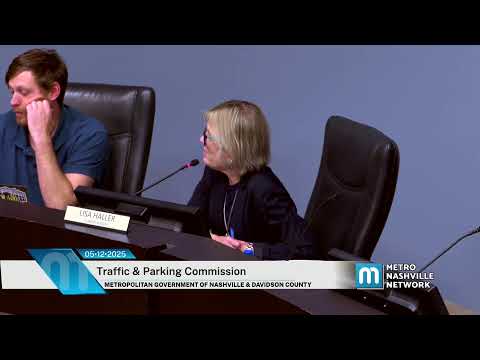
Traffic commission approves temporary downtown service permits with conditions
Loading...
Summary
The Traffic and Parking Commission approved a pilot downtown temporary service business permit program that lets qualifying commercial businesses issue two two‑hour placards to service providers; the vote included conditions on definitions, penalties and signage.
NASHVILLE — The Traffic and Parking Commission on Tuesday approved a temporary downtown service business permit that will allow qualifying commercial businesses to receive a $100 permit and give two two‑hour placards to service providers to use in downtown loading zones.
The permit, proposed by the Nashville Department of Transportation (NDOT) and approved after extended discussion, is intended to give service companies more time to perform building repairs and maintenance in the downtown commercial footprint west of the Cumberland River. NDOT said the pilot is temporary and will be phased out as a planned smart loading program with automated license‑plate readers is deployed.
Brent Schultz, Connect Downtown coordinator, told the commission, "The purpose of the DTSB permit is to grant additional time for service business to obtain needed services. It's really a very simple permit process. It's a hundred dollars. We issue it to the merchant or the property owner, business owner, and they get 2 placards to give to their service companies." Schultz said the placards are numbered and watermarked and that NDOT staff will oversee issuance and enforcement.
Comprehensive discussion centered on eligibility, enforcement and potential effects on other curb users. Commissioners asked how many loading zones lack docks, whether day‑to‑day delivery companies are included, and how NDOT will prevent a single loading zone from being monopolized. Schultz and NDOT staff said they did not have a definitive count of loading zones without docks and that the temporary permit is aimed at building‑service work (HVAC, plumbing, electrical, audio systems, beer‑tap servicing and similar capital equipment repairs), not routine deliveries.
NDOT Director Diane Alarcon said the program responds to requests from small downtown businesses and would be an interim measure until the department’s smart loading pilot is active. "These are small mom and pops," Alarcon said. "They don't have big pockets. The bar owners and many of the restaurants that use these smaller mom and pops wanted to take on that onus and responsibility so that our enforcement team would be able to use it in the interim until we got the program up and running." She added NDOT had discussed the program with enforcement and police commanders.
Commissioners pressed for clarity on several points. Key clarifications extracted from the meeting record and NDOT staff responses: - Fee and placards: Permit fee $100; each approved business receives two placards to give to service providers. (Schultz) - Time limit: Permitted service vehicles may use a designated loading zone for up to two hours when displaying a placard; the existing non‑permit standard cited in discussion is 30 minutes for freight loading zones and three minutes for passenger zones under prior practice. (Schultz; NDOT staff) - Enforcement: NDOT enforcement staff will monitor permits; the department said enforcement staffing is available 24/7. (NDOT) - Penalties: Draft penalty language provides a formal warning and citation for a first violation and permit revocation after a second violation tied to the permit holder’s related service providers; NDOT said it will refine language to clarify whether the second violation refers to a repeat by the same service provider or any related service provider. (NDOT legal counsel) - Scope: NDOT and counsel said the program is not intended for routine delivery companies (Coca‑Cola, food delivery) and that NDOT can reject permits that do not meet the stated service criteria. (Schultz; Alarcon)
Several commissioners suggested additional safeguards: creating a service‑provider permit (in addition to a business permit), posting permit information online so nearby businesses can see authorized service providers, clearer signage of time limits, and revising the draft penalty language to make enforcement expectations explicit. NDOT agreed to return with cleaned language on the "services" definition, revised penalty wording for section 8(b), and a plan for how the permit time limit will be recorded and displayed (on the permit and via electronic tracking) while the program is in effect.
The commission approved the item with the conditions that NDOT incorporate the staff memo's description of eligible service businesses, change section 8(b) to clarify that a second violation by any related service provider may trigger revocation, and ensure the two‑hour limit is shown in permit documentation and enforcement processes. The motion passed by voice vote; a roll‑call tally was not recorded in the meeting transcript.
NDOT staff repeatedly emphasized that the permit is temporary and that the agency expects to roll the program into a larger smart‑loading curb management system using automated license‑plate readers in a later phase.
The commission asked NDOT to report back on program performance and signage, and to return with finalized language for the scope and enforcement provisions.