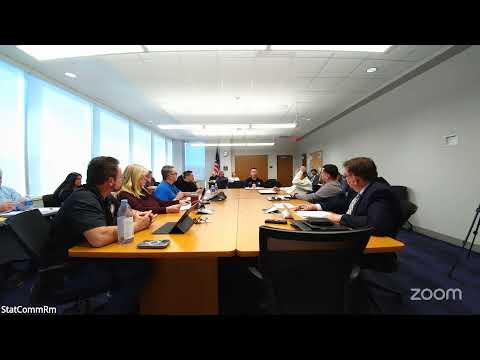
Committee approves four part-time enforcement technicians as county's school-bus stop-arm camera program expands
Summary
Orange County will create four additional part-time enforcement technician positions to support the school-bus stop-arm camera enforcement program; officials said the program is vendor-funded and intended to reduce dangerous passing of school buses as more districts join.
Orange County's Personnel and Compensation Committee voted April 14 to create four additional part-time Enforcement Technician positions (grade 9, step 2) to support the county's school-bus stop-arm camera enforcement program. Salaries for the part-time roles were described as paid from fines collected by the program.
Deputy Commissioner Dawson of the Department of Emergency Services said the program launched last year and has expanded from four school districts (Washingtonville, Newburgh, Middletown and Kiryas Joel) to include six more that are either signing agreements or already live; Goshen Central went live the previous week. Dawson said the county expects roughly 80% more buses to come online as additional districts join and that the vendor provides the onboard equipment.
Dawson told the committee the program has reviewed over 25,000 potential violations since September and mailed more than 15,000 violation notices; about 1,000 notices so far are listed as contested, "so about 10 to 15%" of notices, he said. Dawson said the county is using the data proactively, sharing top locations and times with municipal police and school districts so local enforcement and routing changes can reduce risky behavior. "Our goal is to issue no violations," Dawson said, describing public-education and enforcement as complementary.
Committee members asked about program costs and data. Dawson said there is no cost to county taxpayers for the equipment and back office: the contractor funds the cameras and system, and revenue from fines is split between the contractor and the county; county funds would pay personnel monitoring the system. The program uses a vendor platform (referenced in discussion as the vendor/back-end system); enforcement technicians review video evidence and determine whether to issue violations.
The committee approved creation of the four part-time positions by voice vote. Officials said the positions are part time to allow hours to decline if violations fall after education and enforcement measures; they also said the county would continue to provide public information, work with school districts on stop locations and timings, and supply data to municipal law enforcement.
AI generated
The text on this page is AI generated. Summaries, highlights, analysis, and video transcripts are all produced from the original source material.
AI can make mistakes, so if you spot one, and we will fix it for everyone.
Note: the source content is unaltered by us. Any content source we link to, be it a video, an audio recording, or a document, is presented exactly as its publisher released it. That publisher is usually a government body, sometimes an individual official or another organisation.