Lifetime Citizen Portal Access — AI Briefings, Alerts & Unlimited Follows
Senate Commerce Committee hears competing evidence on ending clock changes; witnesses split on permanent daylight time vs. standard time
Loading...
Summary
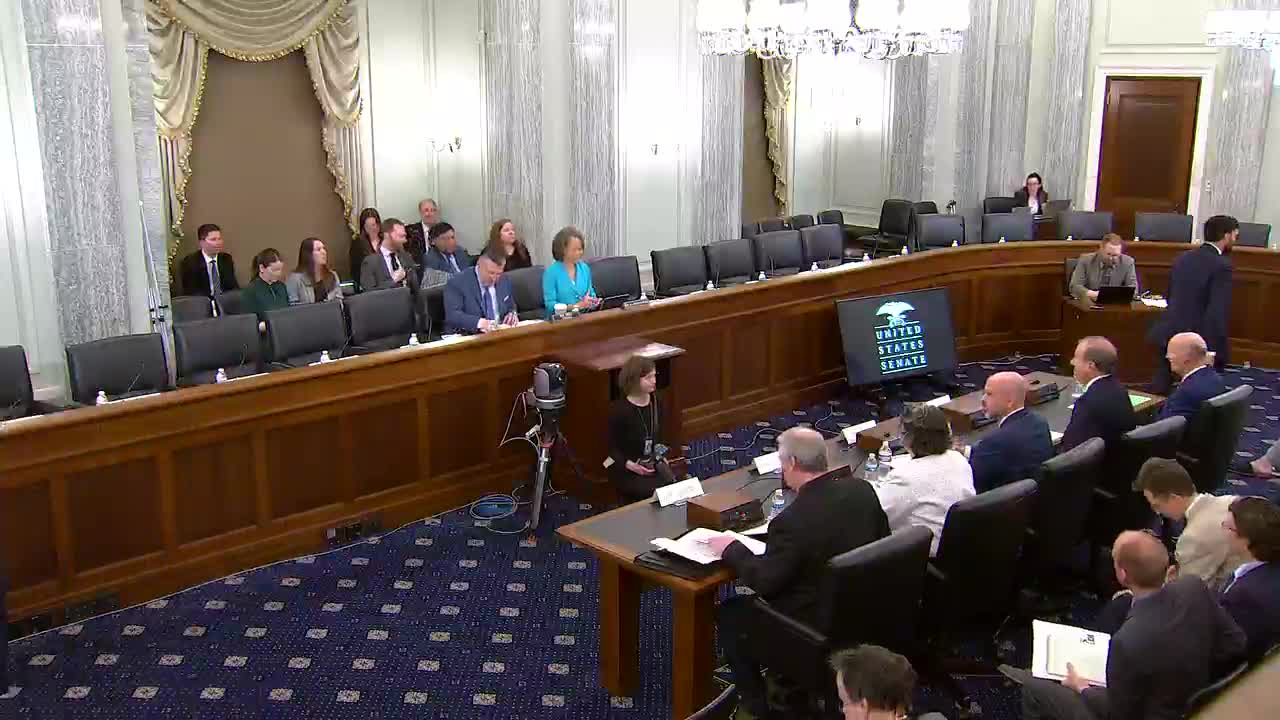
At a hearing of the Senate Committee on Commerce, Science, and Transportation, senators and expert witnesses debated legislation to end twice-yearly clock changes and whether the United States should adopt permanent daylight saving time or permanent standard time.
At a hearing of the Senate Committee on Commerce, Science, and Transportation, senators and expert witnesses debated legislation to end twice-yearly clock changes and whether the United States should adopt permanent daylight saving time or permanent standard time. The hearing featured testimony from the Sunshine Protection Act’s sponsor and four witnesses representing advocacy, business, sleep medicine and road-safety research.
Committee members framed the choice as a trade-off between near-term harms from the biannual time shifts and longer-term effects of where the nation would “lock the clock.” Senator Rick Scott introduced the Sunshine Protection Act, which would make daylight saving time the national, year‑round standard; he told the panel the bill has bipartisan backing in the Senate and a House companion. Supporters called for fixing the system nationally; opponents and some health experts warned that locking to daylight saving time would worsen circadian misalignment for many Americans.
The core disagreement at the hearing was procedural and geographic as well as scientific: several witnesses and senators said ending the twice‑yearly switch is desirable, but they differed on whether Congress should set permanent daylight saving time, set permanent standard time, or give states a transition and then let them choose.
Scott Yates, founder of the Lock the Clock movement, argued both that the biannual switch is harmful and that a federal fix should include a two‑year implementation window so states and local systems can adapt. "Lock the clock as this bill says, but after a 2 year implementation," Yates said, arguing the delay would give states and schools time to adjust schedules. He cited peer‑reviewed studies finding short‑term spikes in heart attacks, strokes and crashes after the spring change and noted researchers use the change as a natural experiment to measure harms.
Jay Karen, chief executive of the National Golf Course Owners Association, framed the choice in economic terms for recreational industries. He told the committee golf and many outdoor activities depend on “recreational daylight” — sunlight that overlaps with when people are available after work — and that permanent standard time would shift an hour of that recreational daylight into the morning. Karen said his association represents roughly 4,000 courses and described the U.S. golf economy as a $102 billion industry employing nearly 2 million people. He estimated making standard time permanent could reduce rounds and revenue for many courses and that a majority of his members favor permanent daylight saving time.
Dr. Karen Johnson, a neurologist and sleep medicine specialist representing the American Academy of Sleep Medicine, told senators that while the spring shift carries acute harms, permanent daylight saving time would produce worse chronic circadian misalignment. "Permanent daylight savings time is worse," Johnson said, and she urged permanent standard time as the healthier choice. She cited a March Gallup poll showing a shift in public opinion favoring permanent standard time, and said permanent daylight saving time would cause sunrises after 8 a.m. for several winter months in many places — depriving people of morning light that anchors circadian rhythms and affects sleep, mood and metabolic health.
Dr. David Harkey, president of the Insurance Institute for Highway Safety, summarized IIHS research on crash timing and ambient light. He reported analysis of 10 years of fatality data for five weeks before and after each time change, finding vehicle occupant deaths declined 7 percent after the fall change and rose 12 percent after the spring change; pedestrian and bicyclist fatalities showed the opposite pattern (up 13 percent in the fall, down 24 percent in the spring). Harkey said the net effect in their analysis was small and urged that road safety depends less on the chosen clock than on infrastructure and vehicle technologies that reduce crashes in darkness.
Senators pressed witnesses on state variation and implementation. Several senators referenced differing regional impacts — for example, points made at the hearing that Indiana, New Mexico, Florida, Utah and other states would experience the same federal time choice very differently because of longitude and local schedules. Witnesses offered three repeatable options cited during questioning: (1) Congress set permanent standard time, (2) Congress set permanent daylight saving time, or (3) Congress eliminate the switching and allow a transition period for states to decide local measures.
The hearing yielded a shared policy premise but no consensus outcome: senators from both parties expressed wide agreement on ending the twice‑yearly clock change, but the committee did not vote on the Sunshine Protection Act during the hearing. Senators asked follow‑up questions and committed to submit written questions to witnesses; the panel adjourned with the record open for additional submissions.
The record presented a mix of health, safety and economic evidence: studies and experts cited increased heart attacks, strokes, workplace injuries and motor vehicle crashes tied to the spring shift; industry witnesses described measurable revenue impacts from reduced evening recreational daylight; and traffic safety researchers recommended infrastructure and vehicle improvements to reduce dark‑hour fatalities regardless of the clock.
The committee hearing is the latest step in a longstanding national debate — Congress previously adjusted daylight saving time in the 1970s, and later changes to the start and end dates were enacted in the 1980s and 2005 — and senators said any durable solution should weigh geography, commerce and public health. The hearing record will remain open for written questions and follow‑up from senators and witnesses.