Lifetime Citizen Portal Access — AI Briefings, Alerts & Unlimited Follows
La Center planning commission reviews capital facilities and utilities element; transportation update put on hold
Loading...
Summary
The La Center Planning Commission took a first look at the capital facilities and utilities element of the city's comprehensive plan, added green infrastructure policies and a Title 18 definition for essential public facilities, and delayed the transportation element until consultant updates to 2045 growth projections are complete.
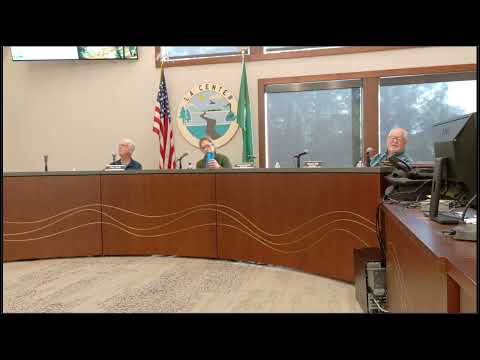
The La Center Planning Commission reviewed a first draft of the comprehensive plan's capital facilities and utilities element at a recent meeting, with staff outlining required Growth Management Act components, added language on green infrastructure and private utilities coordination, and saying the transportation element will be held until a consultant updates 2045 growth projections.
The discussion matters because the capital facilities element must include an inventory of existing public facilities, a six-year capital plan with identified funding sources, and a reassessment of land use if funding cannot meet projected needs. Staff said the draft also adds policies intended to improve coordination with utility providers and to promote equitable access to facilities and utilities for all city residents and property owners.
Alec, the city's contract associate presenting the draft, said the element covers public services including water, sewer, stormwater, law enforcement, fire, library service and schools, plus private utilities such as electricity and natural gas. "Green infrastructure is a wide swath of natural assets or structures within a city that are to include parks and other areas with protected tree canopy and different management styles to manage wet weather and stormwater," Alec said, explaining why the plan adds policies to encourage low-impact development and bioswales.
Staff told commissioners the transportation element is being held until a separate consultant finishes a transportation capital facilities plan that uses updated 2045 growth projection numbers; that delay means the transportation piece will be reviewed later and not included in this immediate package. The commission heard that school-district and library long-range plans are also not yet available: those agencies are conducting their own planning and staff expects final documents by the end of the year, at which point the commission will fold their data into the city's comprehensive plan update.
On utilities and infrastructure specifics, staff said the sewer system has been recently updated on a six-year cycle and currently appears to have sufficient capacity to accommodate projected growth to 2045. Staff noted, however, that tribal systems and county systems may be separate and that details should be confirmed with Tony, the city engineer/staff referenced during the meeting. Private providers consulted for the draft included Clark Public Utilities (electricity), Northwest Natural (natural gas) and telecommunications providers (CenturyLink, Verizon, Comcast), and staff said the draft documents inventory and future-demand scenarios gathered from those providers.
Commissioners pressed staff on how prescriptive the green infrastructure language must be. Staff said state law requires cities to include green infrastructure in capital facilities and utilities elements but does not prescribe specific tree counts, species mixes or planting ratios; the city's approach in the draft is to encourage or incentivize green infrastructure and to condition staff reports on required mitigation for new development where appropriate. "There's no language that the city shall require X number of trees; it's more like the city has to encourage or incentivize or create an environment to provide these infrastructure opportunities," Alec said.
The commission also reviewed a small code amendment to Title 18 to add a definition for "essential public facilities" consistent with state law (RCW). Staff said La Center currently has none of the state-classified essential public facilities but must include the definition and an avenue for siting such facilities should they ever be proposed in the city. The updated code text cited in the meeting is at La Center Municipal Code Title 18, section 18.120.06, and staff said changes were minor and largely align the local definition with state statute.
Staff presented a list of planned capital projects included in the draft element with estimated costs and target completion dates, noting that the six-year capital program will be updated routinely and that the list in the draft currently extends to about 2030. The plan's next steps announced at the meeting: staff will take commissioner comments and prepare a second draft to return for review next month, with the goal of forwarding a package of draft elements (parks, transportation when ready, and capital facilities/utilities) to the City Council in June and adopting a final comprehensive plan prior to the state-mandated deadline at the end of the calendar year.
During public comment before the agenda, resident Lou Rivera said he enjoys living in the community and appreciates the planning commission's work. "I enjoy living in the community, and I've been here two years," Lou Rivera said, adding his support for the planning process. Commissioners also invited the school district and Vancouver Regional Library System to present overview materials upon completion of their long-range planning, to help the commission incorporate those entities' forecasts into the city plan.
Votes at a glance: the commission approved the minutes of the March meeting and later carried a motion to adjourn; both were routine procedural votes recorded without a detailed roll-call tally in the transcript.
The commission scheduled a joint planning commission and city council workshop on subarea planning later in the month and said its next regular meeting is set for May, with the second draft of the capital facilities and utilities element to be returned for review then.