Lifetime Citizen Portal Access — AI Briefings, Alerts & Unlimited Follows
Alaska witnesses say culture-based programs funded by DOE improve outcomes; call for more ANEP funding
Loading...
Summary
Sealaska Heritage Institute and Alaska educators told the Senate Committee on Indian Affairs that culture-based programs funded through the Department of Education — including the Alaska Native Education Program and Baby Raven Reads — have produced measurable gains and warrant increased appropriations.
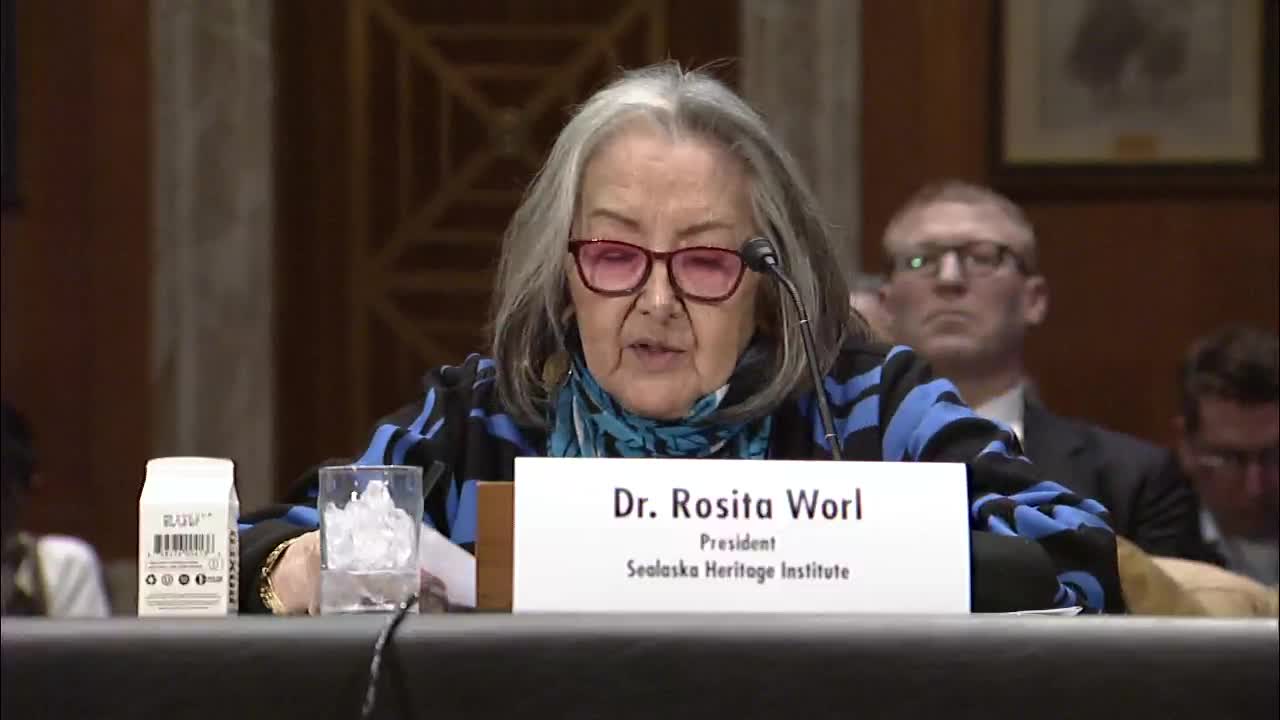
Rosita Worrall, president of the Sealaska Heritage Institute, told the Senate Committee on Indian Affairs that culture-based education programs supported by Department of Education grants have led to measurable academic and social-emotional improvements for Alaska Native students.
Worrall described several program elements she said are tied to progress: direct involvement of Native entities in program design, development of culturally grounded curricula and teacher training, and cross-institution partnerships. She said Alaska Native Education Program (ANEP) grantees “have successfully intervened on behalf of native students and families to contribute to their success, both academically and socially,” and recommended an increase in the ANEP appropriation for fiscal 2026 to $70,000,000.
Worrall highlighted Baby Raven Reads, an early-literacy series developed for Alaska Native children, as an example of culturally grounded curriculum. She told the committee that evaluations showed reading scores improving — “in 2020, the reading scores improved by 20 points” — and reported that in Juneau, as of September 2024, “native literacy scores are higher than non natives” in district programs that integrated language and culture.
Edmond Public Schools’ Title VI coordinator Sydney Yellowfish described how Title VI funding allowed her district to create a high-school credit course teaching tribal history and culture and to support students facing acute needs, from securing broadband and devices for a displaced senior to intervening in a commencement ceremony dispute over a beaded cap. Yellowfish and other witnesses told senators that Title VI’s flexibility and direct funding to districts make it possible to tailor services to tribal students who often live outside their tribal jurisdictions and lack direct access to tribal services.
Witnesses asked Congress to preserve culture-based program funding, maintain tribal consultation requirements and avoid rerouting program dollars through states.