Get Full Government Meeting Transcripts, Videos, & Alerts Forever!
Get email alerts on the Federal Education Policy Native Students topic
No spam. Unsubscribe anytime.
Senate Indian Affairs hearing: lawmakers and tribal educators warn DOE cuts would undermine federal trust responsibility
Summary
Senators and tribal education leaders told the Senate Committee on Indian Affairs that proposals to dismantle or reorganize the U.S. Department of Education would harm programs serving American Indian, Alaska Native and Native Hawaiian students and risk breaking the federal trust and treaty obligations to those communities.
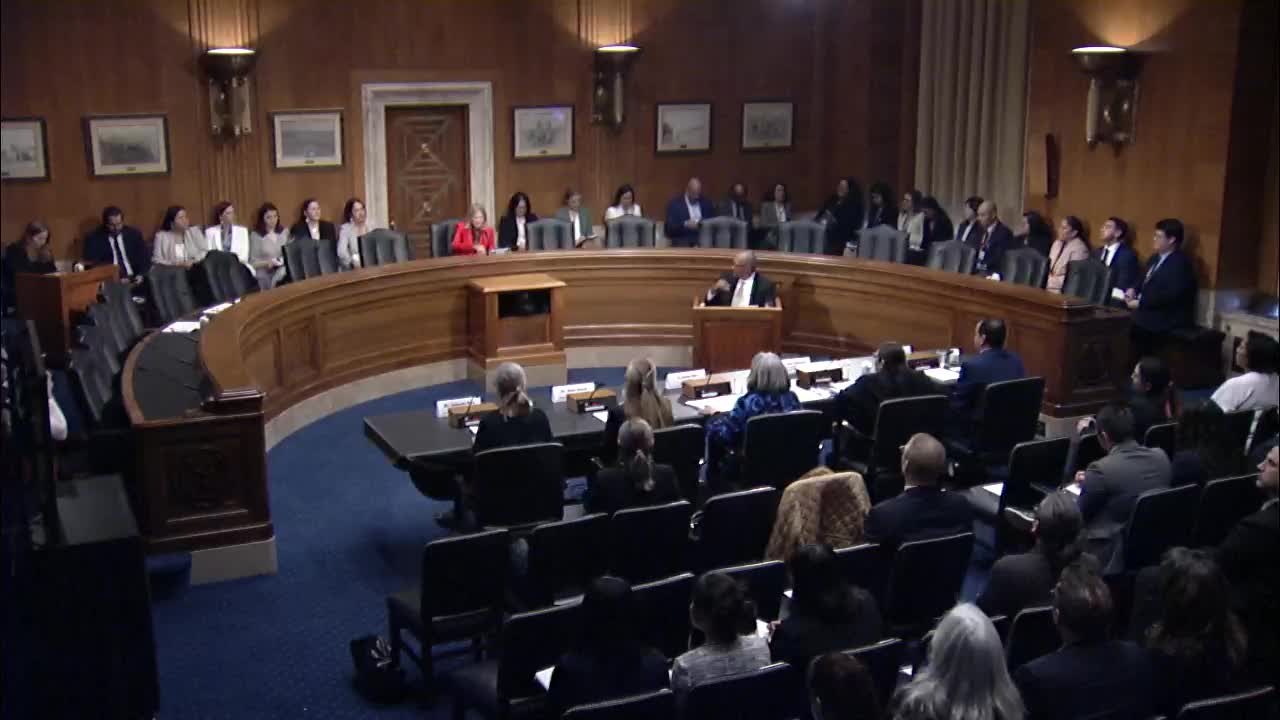
Chairwoman Lisa Murkowski opened a Senate Committee on Indian Affairs oversight hearing by saying the committee had convened to “learn more about the U.S. Department of Education programs that work to meet the trust responsibility that the federal government has to our native students in elementary, secondary, and post secondary education.”
Witnesses from tribal and education organizations warned that recent executive proposals to reorganize or dismantle the Department of Education risk disrupting programs that tribal leaders consider central to the federal government’s trust and treaty obligations. “This is a unique moment in time,” said Jason Dropek, executive director of the National Indian Education Association. “We urge you to remember the federal government has a direct and unique responsibility to native students.”
The testimony detailed how native-specific programs and broader federal education programs interact to serve Native students who largely attend public schools. Committee members and witnesses repeatedly noted that more than 90% of American Indian and Alaska Native students attend public schools and that Department of Education funding — including Title VI Indian Education formula grants, Title I, IDEA and Higher Education Act programs — provides flexible supports such as tutoring, mentoring, language and culture programs and postsecondary funding.
Sen. Catherine Cortez Masto (D-Nev.) emphasized the primacy of statute over executive action: “An executive order is not a law. It is an instruction about how to implement a law.” Witnesses warned that restructuring without meaningful government-to-government consultation and protections for tribal set-asides and direct funding could reroute dollars through states and trigger delays and loss of programmatic flexibility.
Testimony described recent personnel disruptions at the Department of Education, including relocations, staff reductions and instances of native-serving staff placed on administrative leave. Witnesses said those changes reduced institutional knowledge critical to administering programs to tribes. Dropek recommended that any funding structure preserve direct funding and tribal set-asides and urged an increase in set-asides to reflect tribal administrative costs, saying, “We recommend increasing this set-aside to 5% to reflect tribal administrative costs and the lack of tax revenue.”
Committee members questioned witnesses about consultation practices, data collection and the consequences of moving programs. Nicole Russell, executive director of the National Association of Federally Impacted Schools, said moving programs would create “unnecessary bureaucratic hurdles” and risk delays in payments. Anawake Rose, president and CEO of the American Indian Higher Education Consortium, and other witnesses pressed for stability for tribal colleges and universities (TCUs) and reaffirmed that tribal consultation must be part of any change.
The hearing ended without formal committee votes. Senators said they would continue oversight and legislative work to protect funding streams, consultation requirements and the programs that tribes said are essential to educational outcomes for Native students.