Lifetime Citizen Portal Access — AI Briefings, Alerts & Unlimited Follows
Boeing CEO Kelly Ortberg tells Senate committee the company is reshaping safety and production controls
Loading...
Summary
Boeing President and CEO Kelly Ortberg testified to the Senate Commerce Committee about company changes after recent safety incidents, outlined steps to reduce defects and strengthen culture, and declined to commit to refusing future FAA redelegation of inspection authority while the FAA implements IG recommendations.
Kelly Ortberg, president and chief executive officer of the Boeing Company, told the Senate Committee on Commerce, Science, and Transportation that Boeing has enacted "sweeping changes" to people, processes and structure to restore safety and quality, and offered a string of specific corrective steps in response to recent manufacturing problems including last year’s door‑plug blowout on Alaska Airlines Flight 1282.
Ortberg said Boeing has worked with the Federal Aviation Administration under a plan that tracks key performance indicators (KPIs). He told senators the company has collected more than 26,000 employee improvement ideas, is simplifying processes, enhancing training and reducing supplier defects. "It’s unacceptable that an aircraft left our factory without that door plug properly installed," Ortberg said, describing actions Boeing took after the Alaska Airlines incident: field inspections with airlines and the FAA, retraining, narrowing who may remove or re‑install door plugs, and changes to the production flow to hold aircraft when safety risk assessments indicate a hazard.
Why it matters: Committee members repeatedly framed the hearing against the backdrop of the two 737 MAX crashes that killed 346 people and the January 2024 Alaska Airlines fuselage failure. Senators pressed Ortberg on whether Boeing’s operational and cultural changes are sufficient to restore public trust, whether the company will accept limits on self‑inspection authority while FAA oversight gaps remain, and how Boeing will prevent defects from entering the production line.
Key commitments and company figures cited in testimony
- Ortberg said Boeing submitted its safety and quality plan to the FAA ahead of schedule and expects to implement a mandatory Safety Management System (SMS) by October of this year.
- He said Boeing recorded about a 56% reduction in fuselage defects arriving from Spirit AeroSystems after process changes and that Boeing has seen a 50% reduction in work that "has traveled down the factory floor" (work‑in‑process that requires rework farther along the line). Ortberg also said Boeing conducted about 800 move‑readiness safety assessments and held aircraft in about 200 of those cases because moving would have increased risk.
- Ortberg told senators Boeing expects to complete its acquisition of Spirit AeroSystems later this year and said the company will not move work out of Wichita, Kansas; he also noted Boeing’s recent selection by the U.S. Air Force for the F‑47 program.
Questions from senators and areas of disagreement
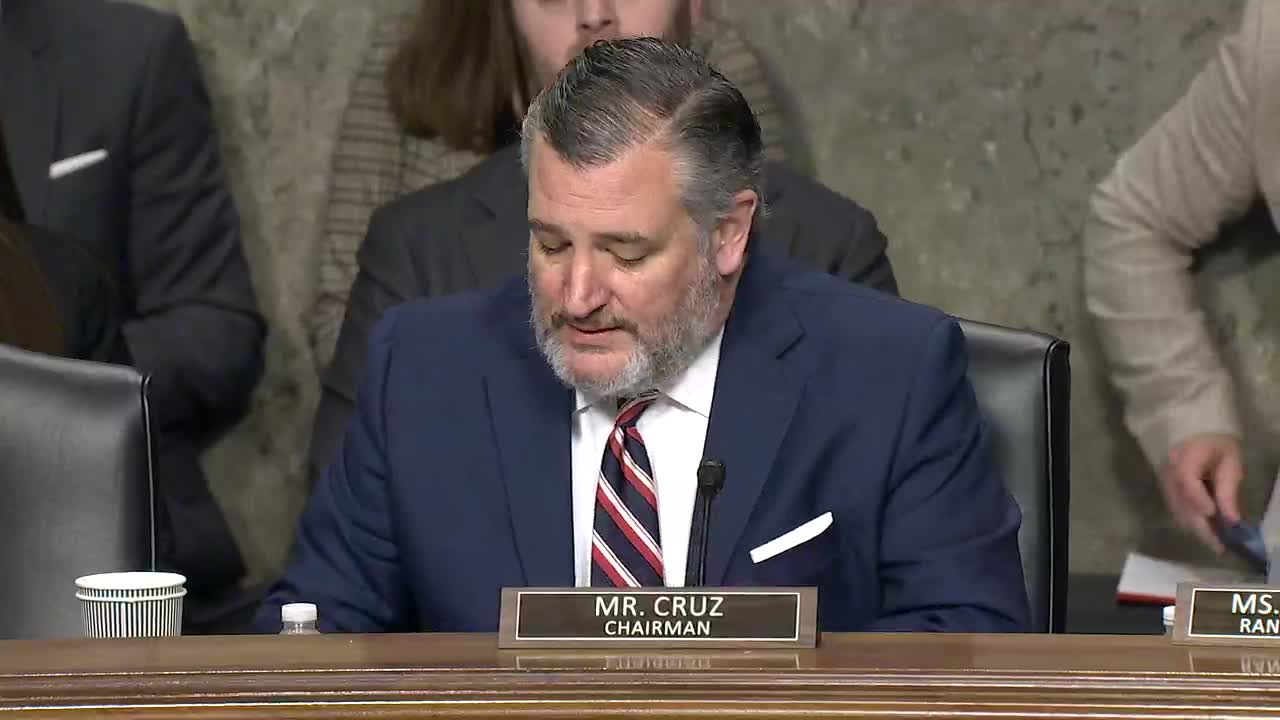
- Senator Ted Cruz asked, "Can travelers trust Boeing?" and pressed Ortberg on whether manufacturing defects contributed to the MAX crashes; Ortberg said his understanding attributes the MAX crashes to MCAS design issues and that he was not aware of electrical wiring problems but offered to investigate.
- Senator Tammy Duckworth pressed Ortberg to commit not to accept redelegation of airworthiness inspection authority (ODA delegation) from the FAA until the FAA implements all 16 recommendations in the Department of Transportation inspector general’s report. Ortberg declined to make that categorical commitment, saying the FAA is the regulator and Boeing must work with it to determine appropriate delegation.
- Several senators pressed Ortberg on whistleblower protections and employee channels for reporting safety concerns. Ortberg described a "speak up" system that accepts anonymous reports, an independent chief compliance officer who reviews speak‑ups, and an ombudsman for ODA personnel. He said his door is open to whistleblowers and that the company enforces an anti‑retaliation policy.
What the company says about production rates and KPIs
Ortberg said Boeing will not increase production rates unless KPIs show a stable production system and that Boeing and the FAA monitor those KPIs monthly. He said the company hopes to move above a capped rate of 38 737‑MAX deliveries per month sometime this year but offered no firm public timeline; senators repeatedly emphasized that any ramp‑up must be driven by validated quality metrics and FAA approval.
Ending: Senators said they will continue intensive oversight on Boeing’s reforms, FAA’s delegated‑authority process, and related DOJ settlement discussions. Crews closed the hearing and said senators may submit follow‑up questions to the record.